Description
| Parameter | Details |
|---|---|
| Detected Gas | Nitrite (NO₂/NO₃ compounds) |
| Detection Range | 0–100 ppm |
| Sensor Type | Electrochemical |
| Response Time (T90) | ≤ 30 seconds |
| Accuracy | ±2% of full scale |
| Output Signal | 4–20 mA / RS-485 Modbus |
| Operating Temperature | -20°C to +40°C |
| Power Supply | 12–24 VDC |
| Enclosure Rating | IP65 (dust & water resistant) |
| Mounting Type | Wall or duct mount |
| Manufacturer | PureAir |
| Applications | Semiconductor fabs, chemical labs, aerospace, biotechnology |
Nitrite or nitrate gas refers to compounds that release nitrogen oxides, which are by-products of chemical reactions in industrial processes such as fertilizer production, semiconductor cleaning, and waste treatment. These gases can be toxic at high concentrations, posing health and environmental hazards. A nitrite gas detector is designed to sense and measure these emissions in real time, ensuring compliance with safety regulations and protecting sensitive processes from contamination.
In industries dealing with nitrate detection and nitrite derivatization, monitoring gas levels is crucial to prevent corrosion, chemical reactions, or worker exposure.
A gas sensor works by converting the chemical presence of a gas into an electrical signal. When nitrite gas interacts with the electrochemical cell in the nitrite gas sensor, a measurable voltage is generated, allowing the detector to determine the concentration of gas in the environment with high precision.
Nitrite forms through the oxidation of ammonia or reduction of nitrate, commonly occurring in chemical reactions, wastewater treatment, and industrial exhaust systems. Understanding nitrite formation helps industries implement better nitrite gas detection and control systems to reduce environmental and safety risks.
Gas detectors generally fall into four main categories:
-
Electrochemical sensors – For detecting toxic gases like nitrite, chlorine, or CO.
-
Catalytic bead sensors – For combustible gas detection.
-
Infrared sensors (IR) – For CO₂ and hydrocarbons.
-
Photoionization detectors (PID) – For volatile organic compounds (VOCs).
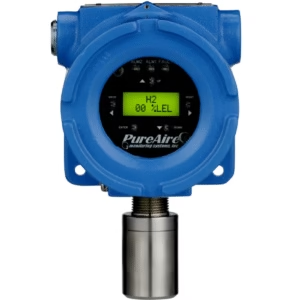
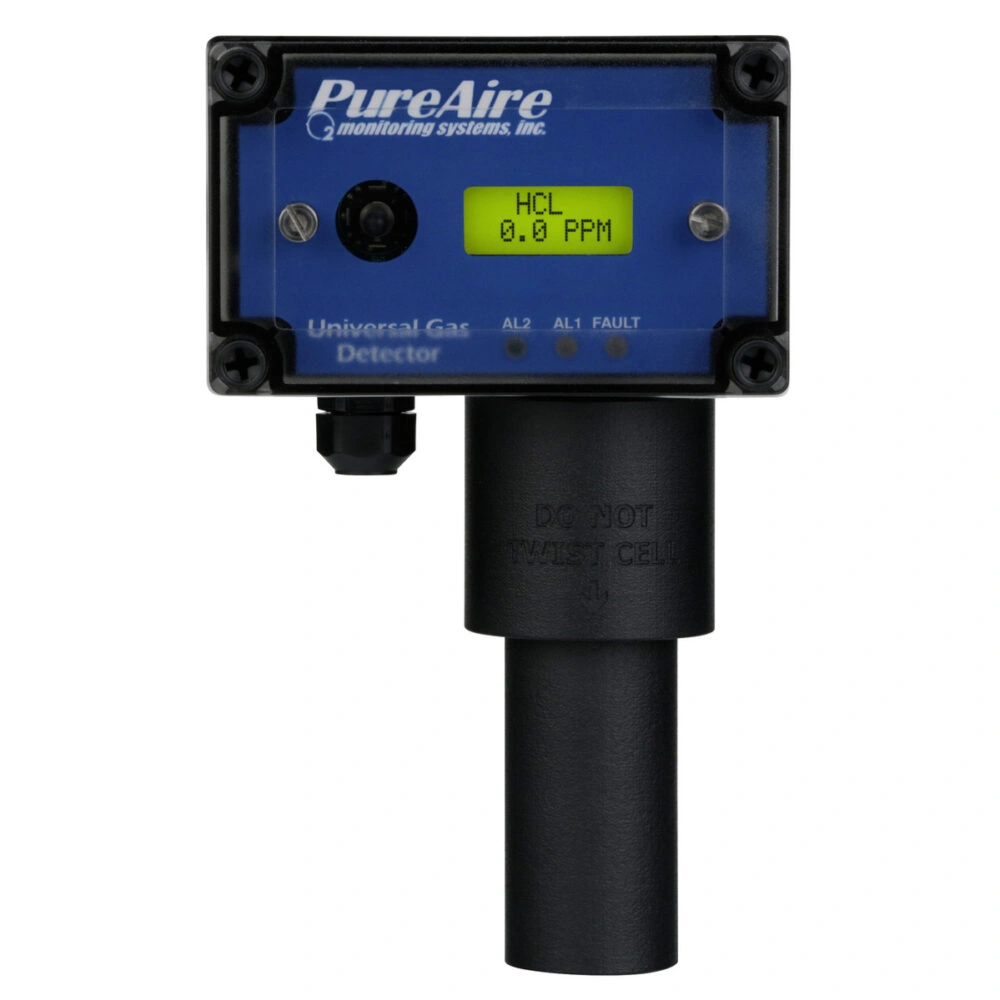
The nitrite gas transmitter from PureAire utilizes electrochemical technology, providing exceptional stability and sensitivity ideal for industrial use.
With the UAE and GCC regions focusing on high-value industries such as aerospace manufacturing, semiconductors, and pharmaceuticals, maintaining safe air quality is vital. Facilities in Dubai and Abu Dhabi require continuous nitrite gas monitoring to ensure compliance with global safety standards.
The PureAire Nitrite Gas Detector supports the UAE’s vision for advanced safety systems, offering dependable detection that helps protect workers, equipment, and production processes in an era of industrial growth and innovation.
When working with nitrite or nitrogen-based gases, tools like nitrogen gas flow meters, nitrogen gas filters, and nitrogen gas analyzers ensure process stability. Professionals often perform nitrogen gas tests to verify system integrity and use nitrogen sensors for continuous monitoring. Even accessories like nitrite gaskets are used to prevent leaks in sensitive setups.
For reference, nitrogen gas pressure and nitrogen gas filtration systems play an important role in maintaining a clean and safe work environment.
Why Choose Gas Detectors UAE?
At Gas Detectors UAE, we specialize in delivering high-accuracy gas detection systems tailored to industrial and laboratory environments. As the authorized distributor of PureAire in the UAE, we provide trusted products that combine durability, performance, and compliance.
📞 Contact us today to get the PureAire Nitrite Gas Detector — your dependable choice for nitrite detection and gas transmitters in advanced industries.
We are your hydrogen gas detection suppliers in UAE, committed to ensuring safety and performance in every operation.