Description
| Parameter | Specification |
|---|---|
| Target Gas | Hydrogen Peroxide (H₂O₂) |
| Detection Range | 0 – 10 ppm |
| Sensor Type | Electrochemical, non-depleting |
| Accuracy | ± 0.5 ppm |
| Response Time (T90) | < 60 seconds |
| Output Signal | 4–20 mA |
| Power Supply | 24 VDC |
| Operating Temperature | 0°C to +40°C |
| Display | Optional digital readout |
| Calibration | Not required (factory-calibrated) |
| Lifespan | Up to 10 years without maintenance |
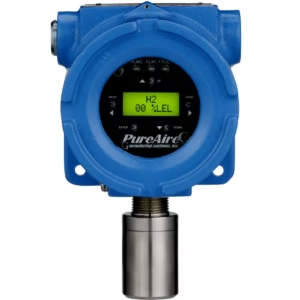
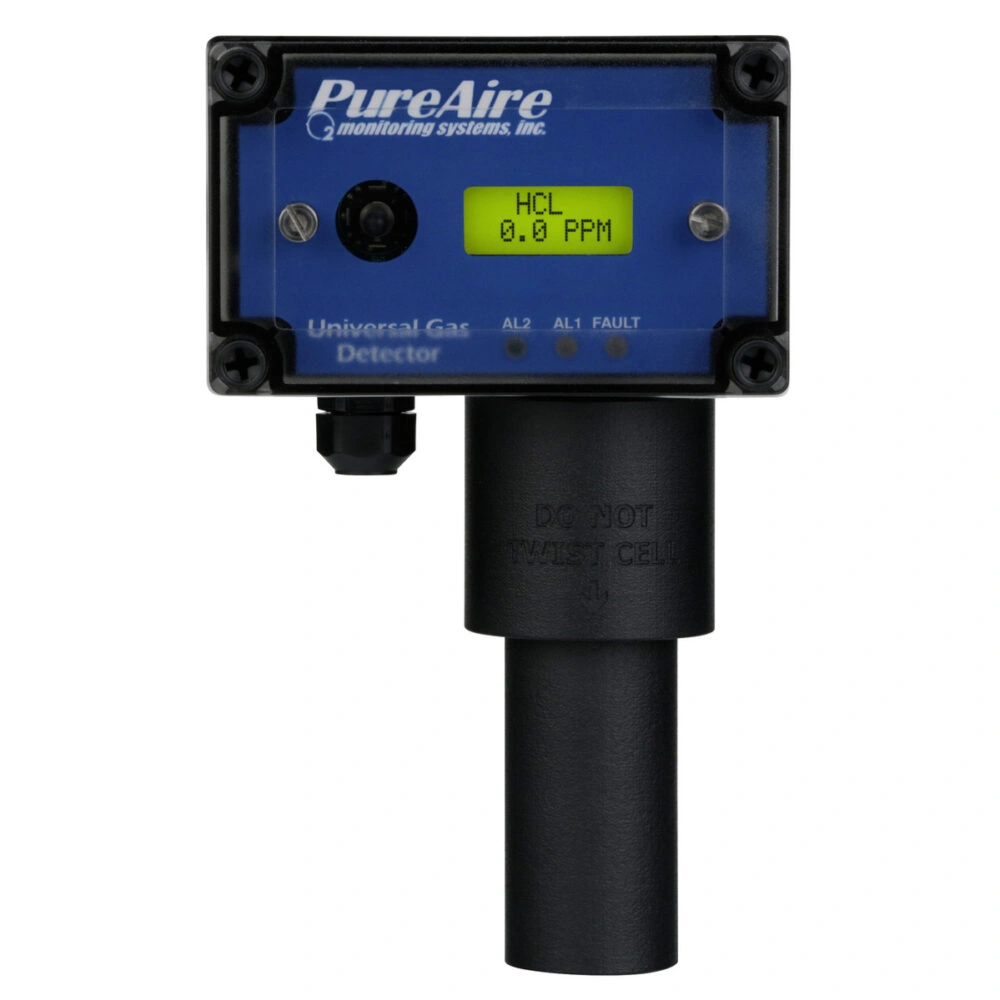
| Mounting | Wall or surface mount |
| Enclosure Rating | NEMA 4X / IP65 |
| Dimensions | 5.5” x 4.5” x 2.5” |
| Certifications | CE, RoHS compliant |
Hydrogen peroxide (H₂O₂) is a powerful oxidizing agent widely used for sterilization and decontamination in pharmaceuticals, cleanrooms, and healthcare facilities. When vaporized, it becomes an effective disinfectant but can be harmful when inhaled, even in small concentrations. Prolonged exposure can irritate the lungs, skin, and eyes. Therefore, continuous hydrogen peroxide gas detection is critical to maintaining workplace safety and ensuring regulatory compliance.
A hydrogen gas sensor detects gas concentrations using electrochemical or catalytic technology. In electrochemical models, gas molecules react on an electrode surface, generating an electrical current proportional to the concentration of hydrogen or hydrogen peroxide present. This signal is then converted into a readable output, enabling instant alerts and system responses.
Hydrogen is colorless, odorless, and extremely flammable. When mixed with air, it can ignite easily and pose explosion risks. In confined spaces, undetected hydrogen accumulation can cause severe hazards. Hence, installing a hydrogen gas detector ensures early leak detection and prevents accidents.
Hydrogen gas can be detected using a hydrogen gas sensor or transmitter integrated into safety systems. These devices measure gas concentration levels and activate alarms or ventilation systems when thresholds are exceeded. Modern hydrogen gas monitors use solid-state or catalytic sensors for precise and fast readings in industrial settings.
In the UAE and GCC, industries like semiconductor manufacturing, aerospace engineering, and pharmaceuticals are rapidly expanding under national innovation programs. These facilities depend heavily on hydrogen peroxide sterilization and other high-purity processes.
Installing a hydrogen peroxide gas monitor helps organizations comply with UAE Occupational Health and Safety standards, reduce contamination risks, and ensure uninterrupted production. For aerospace MROs in Dubai and Abu Dhabi, and biotech labs across the Gulf, this detector is vital for meeting international safety benchmarks.
By using the PureAire Hydrogen Peroxide Gas Detector, companies demonstrate a proactive commitment to worker safety, quality assurance, and environmental responsibility.
Why Choose the PureAire Hydrogen Peroxide Gas Detector
- Proven 10-year sensor life with zero calibration needs.
- Provides accurate hydrogen peroxide gas monitoring for controlled environments.
- Easy to install and integrate into building automation systems.
- Designed specifically for the pharma, biotech, aerospace, and semiconductor industries.
- Ensures UAE and GCC regulatory compliance in high-risk facilities.
- Backed by decades of engineering excellence from PureAire Monitoring Systems.
This hydrogen peroxide gas monitor is not only efficient—it’s essential for any high-purity facility seeking safety, precision, and reliability.
Ensure complete protection in your cleanroom or laboratory with the PureAire Hydrogen Peroxide Fixed Gas Detector—trusted by engineers and safety managers across the UAE and GCC.
At Gas Detectors UAE, we are your authorized suppliers of advanced hydrogen peroxide gas detection systems and the official distributor of PureAire.
Contact us today to discuss your requirements, request a quotation, or get expert assistance in selecting the right hydrogen gas sensor for your facility.