Description
| Specification | Details |
|---|---|
| Detection Principle | Photoionization Detector (PID) |
| Detected Gases | VOCs and solvent vapors |
| Typical Calibration Gas | Isobutylene |
| Detection Range | 0…2000 ppm (configurable) |
| Resolution | 1 ppm |
| Response Time | < 10 seconds |
| Sensor Type | PID with UV lamp |
| Outputs | 4–20 mA / 0–10 V, RS485 Modbus RTU |
| Alarm Relays | 2 × configurable relays |
| Power Supply | 12…36 V DC |
| Enclosure Rating | Industrial enclosure for indoor use |
| Operating Temperature | -20…+50 °C |
| Humidity Range | 0–95% RH, non-condensing |
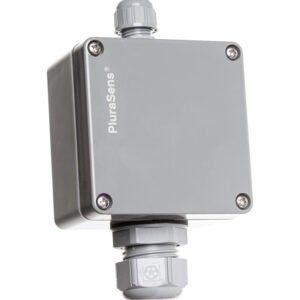
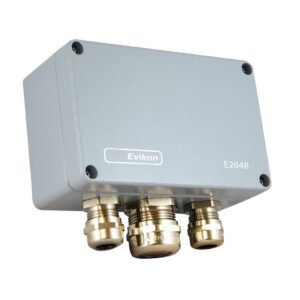
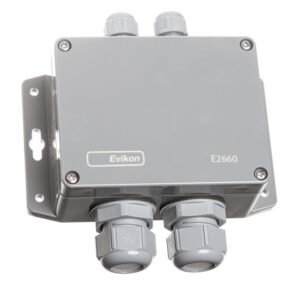
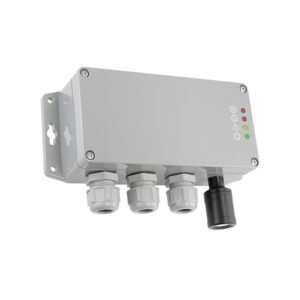
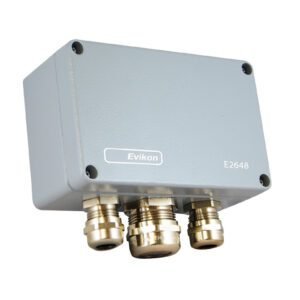
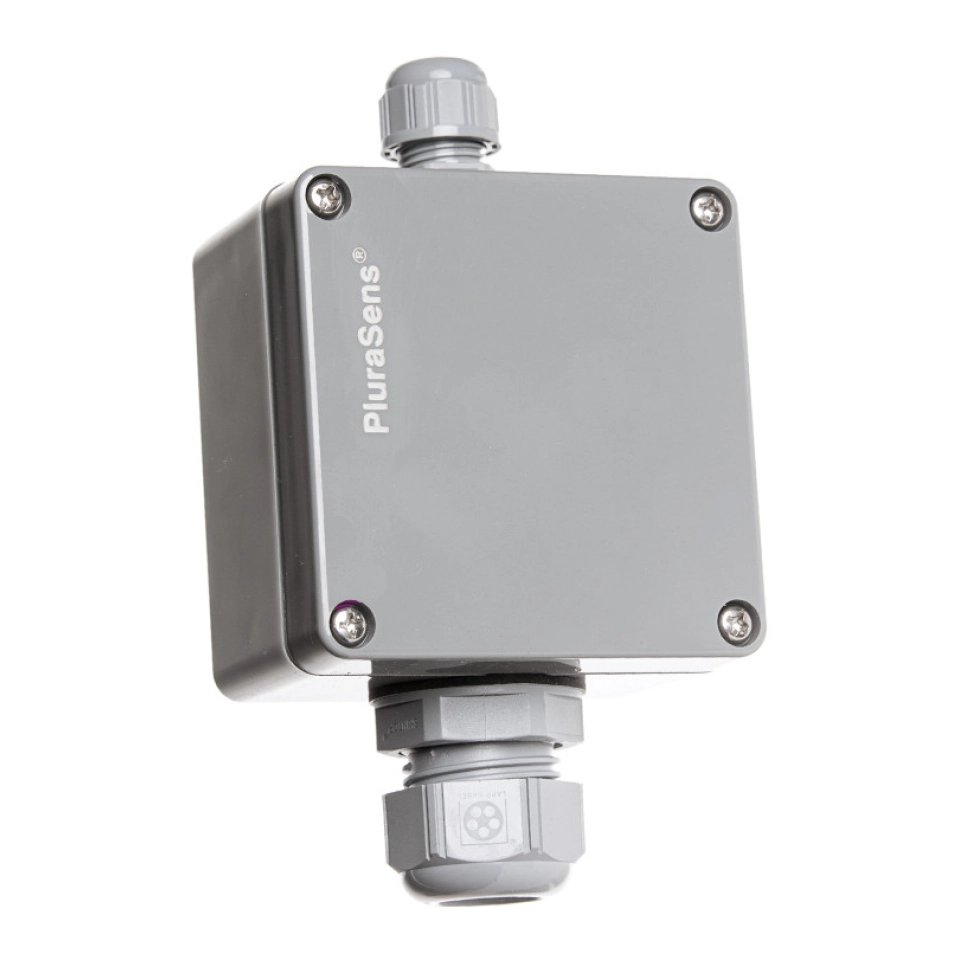
A solvent vapors detector is a safety device that continuously monitors air for volatile organic compounds and hazardous solvent vapors. Acting as a solvent vapors sensor and transmitter, it detects rising vapor levels and sends signals to alarms or control systems before conditions become dangerous.
This proactive vapor detector approach protects workers, ensures regulatory compliance, and prevents contamination or fire risks in environments where solvent mixtures are used. In cleanrooms and laboratories, accurate solvent vapors detection is essential to maintain both safety and product quality.
The water vapour transmission rate (WVTR) measures how much water vapor passes through a material over time.
WVTR = W ÷ (A × t)
Where W is the weight of vapor transmitted, A is the exposed area, and t is time. WVTR is mainly used in material and packaging analysis rather than gas detection.
Common solvents used in solvent extraction include hexane, ethanol, acetone, and ethyl acetate. The choice depends on the compound being extracted, safety requirements, and process efficiency. These solvents are widely used in pharmaceutical, chemical, and food industries.
Solvent extraction works by dissolving a target compound from a solid or liquid mixture into a selected solvent. The solvent selectively attracts the desired substance, allowing it to be separated from unwanted materials. The solvent is then removed or recycled, leaving the purified compound behind.
Why It Is Essential in the UAE & GCC
The UAE and GCC are home to fast-growing aerospace, pharmaceutical, semiconductor, and life-science industries. These sectors demand world-class safety standards and contamination control. A high-accuracy solvent vapors transmitter like the E2618-PID helps facilities meet international HSE requirements, protect skilled workers, and support the region’s long-term economic diversification goals.
How Often Do Gas Detectors Need to Be Calibrated?
For accurate performance, gas detectors and solvent vapors transmitters should be calibrated at least once every 12 months. In high-purity or critical safety environments, calibration every 6 months is recommended to ensure consistent and reliable readings.
Why choose us?
Upgrade your facility’s safety with the Evikon E2618-PID Solvent Vapors Transmitter. Gas Detectors UAE is your trusted hydrogen gas detection suppliers in UAE and Authorised Distributor of Evikon.
Contact us today for expert advice, fast quotations, and compliant solvent vapors detection solutions across the UAE and GCC.