Description
| Specification | Details |
|---|---|
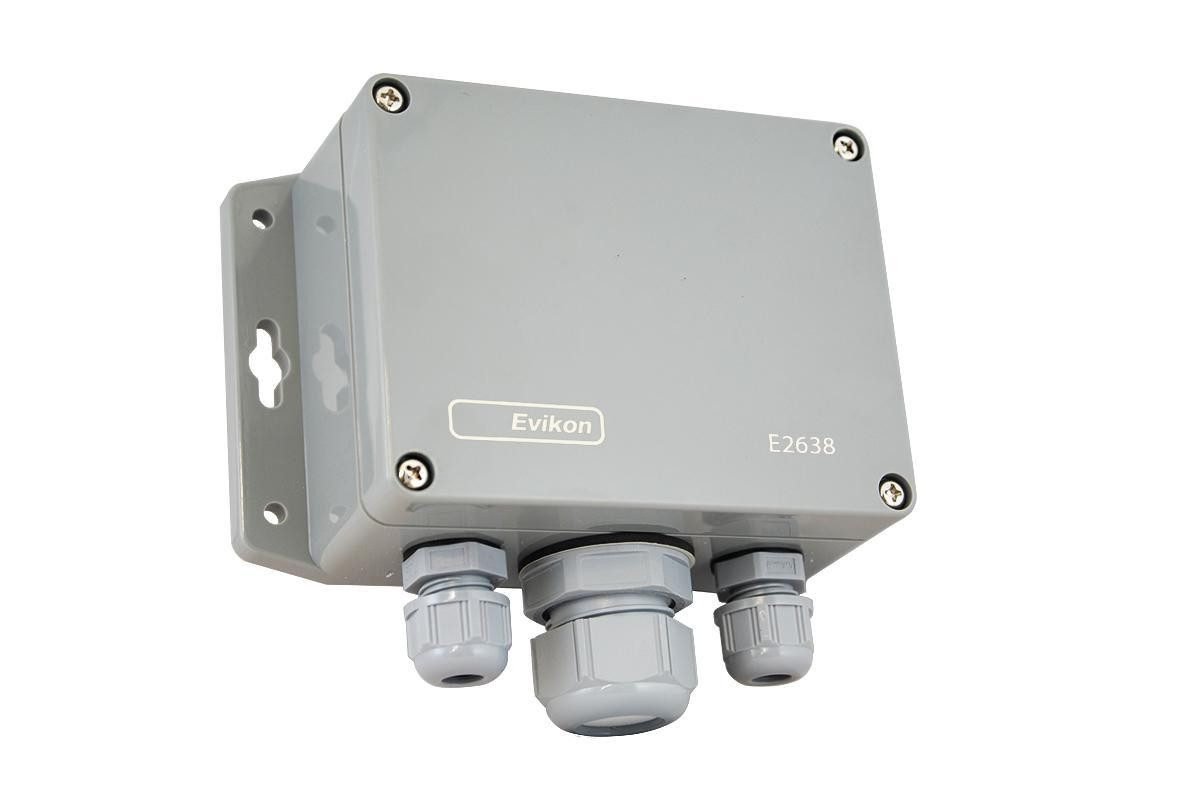
| Brand | Evikon |
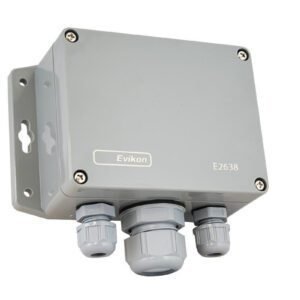
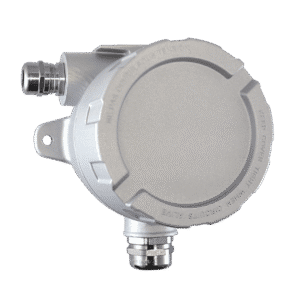
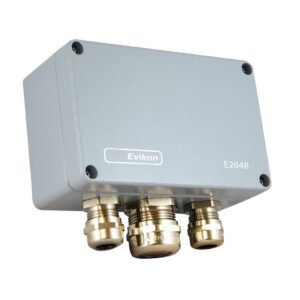
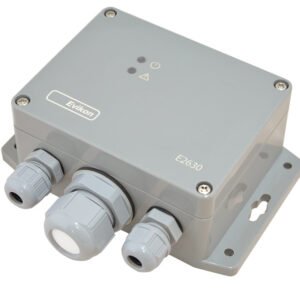
| Model | E2638-LEL Combustible Gas Detector |
| Sensing Technology | Catalytic bead |
| Detected Gases | Methane, Propane, LPG, Hexane, Hydrogen |
| Measurement Range | 0–100% LEL |
| Output Options | 4–20 mA, 0–10 V, Modbus RTU |
| Power Supply | 12–24 V DC |
| Ingress Protection | IP65 |
| Operating Temperature | –20 to +50°C |
| Operating Humidity | 0–95% RH non-condensing |
| Housing Material | Plastic (ABS/PC) |
| Sensor Life | Up to 3 years |
| Mounting Type | Wall mount |
| Available Versions | E2638-LEL-A (Analog), E2638-LEL-M (Modbus) |
A combustible gas transmitter is a fixed gas detection device that continuously measures flammable gas concentrations in industrial or commercial areas. It detects gases such as methane, propane, LPG, butane, and hydrogen before they reach explosive limits. Once detected, the transmitter converts gas readings into electrical output signals—typically 4–20 mA or Modbus—so alarms, ventilation systems, or shutdown mechanisms can be activated. These devices are essential in facilities where flammable gases are used or stored, including semiconductor fabs, pharmaceutical plants, aerospace manufacturing, and cleanroom environments. Their primary goal is to prevent fire hazards, protect personnel, and maintain safe operational environments.
Most combustible gas sensors use catalytic bead technology. When a gas enters the sensor, it oxidizes on the catalyst-coated bead, producing heat. This heat changes the electrical resistance inside the sensor. The transmitter measures this change and converts it into a gas concentration value, enabling real-time monitoring and alarm activation.
Typically, every confined-space entry team should carry at least one portable multi-gas detector, but high-risk sites may require one detector per worker. Industries such as chemical plants, oil and gas facilities, maritime operations, and aerospace maintenance commonly issue personal multi-gas monitors to ensure individual safety redundancy.
There are four major types of gas detectors:
-
Fixed gas detectors – permanent installation for area monitoring.
-
Portable multi-gas detectors – for personal safety and mobile inspection.
-
Single-gas detectors – for monitoring a specific gas.
-
Area monitors – portable but designed for wide-zone coverage.
The UAE and GCC host major oil & gas hubs, high-tech aerospace facilities, industrial mega-projects, and advanced life sciences infrastructure. These sectors depend on strict safety compliance to protect staff, equipment, and assets. With rising hydrogen usage, flammable gas pipelines, and semiconductor production, early detection of leaks using a high-accuracy combustible gas transmitter like the E2638-LEL is essential. Its rugged IP65 design and fast response make it ideal for the region’s challenging climate and safety requirements.
Combustible gas detectors should be calibrated every 6 months. In high-risk or high-humidity environments, calibration every 3 months ensures maximum accuracy and compliance with industrial safety standards.
Why choose us?
Protect your facility with the E2638-LEL Combustible Gas Detector, engineered for precise monitoring in the world’s most demanding industries.
Gas Detectors UAE is the leading hydrogen and combustible gas detection supplier in the region and the Authorised Distributor of Pureair.
📞 Request a quote today and speak with our gas detection specialists for fast support across the UAE & GCC.