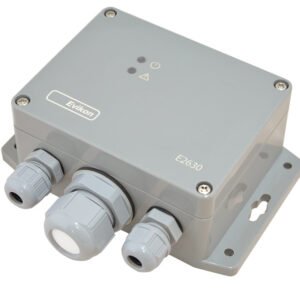
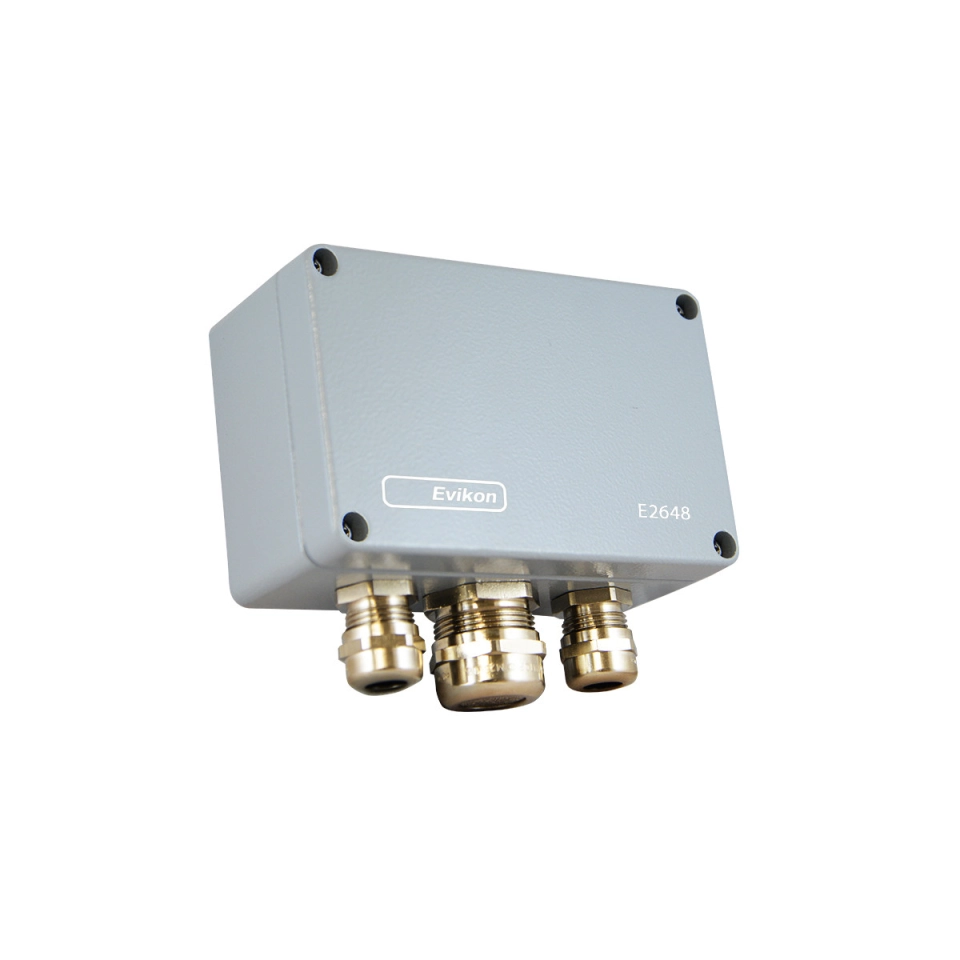
Description
| Specification | Details |
|---|---|
| Detected Gases | Hydrogen, Methane, Acetylene, Propane, Butane, Hexane, Octane |
| Default Calibration | Methane (CH₄) |
| Sensor Type | Metal-oxide semiconductor (MOS); pellistor on demand |
| Sampling Method | Diffusion |
| Detection Range | 0…100% LEL |
| Resolution | 0.1% / 1% LEL |
| Accuracy | ± 2% LEL |
| Sensor Lifetime | > 5 years (MOS) |
| Power Supply | 12…36 VDC (default); 24 VAC or 230 VAC options |
| Analog Outputs | 2 × 4-20 mA / 0-10 V, user settable |
| Digital Interface | RS485 Modbus RTU |
| Output Relays | 2 × SPST, 5 A max (optional) |
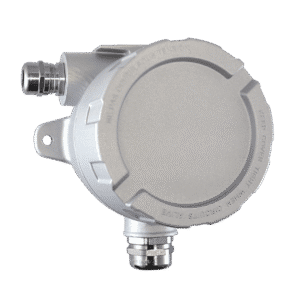
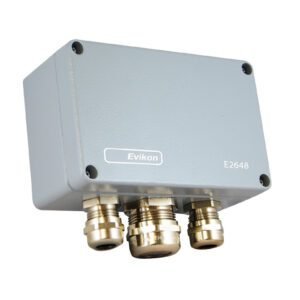
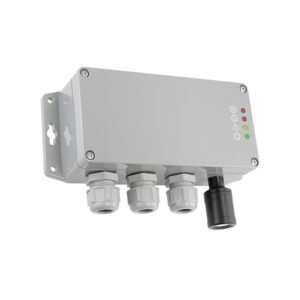
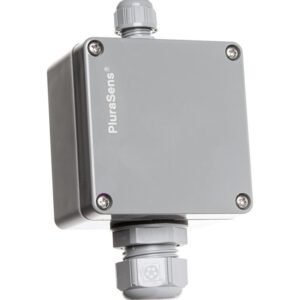
| Enclosure | IP66 wall mount |
| Operating Conditions | -40…+70 °C, 15…95 % RH |
What Is a Combustible Gas Transmitter?
A combustible gas transmitter (or combustible gas monitor) continuously measures the concentration of flammable gases in the air. These systems use a sensitive combustible gas sensor to detect dangerous gases that could ignite or explode. When gas levels reach preset thresholds, the detector sends alarm signals and automation triggers to warning systems, ventilation, or safety shutdowns. This early alert capability is critical for protecting personnel, equipment, and facilities in industrial and commercial settings where flammable gas leaks are a risk.
How Does a Transmitter Work?
A gas transmitter measures gas concentration via its sensor. The sensor’s electrical response changes based on gas levels. This signal is converted into standard outputs — such as analog (4-20 mA or 0-10 V) or digital Modbus — so control systems can react quickly and accurately.
What Gases Does a Gas Monitor Detect?
This combustible gas detector tracks flammable gases like hydrogen, methane, acetylene, propane, butane, hexane, and octane up to 100% of their lower explosive limit (LEL).
How to Use a Combustible Gas Detector
Position the detector where flammable gases could accumulate — near potential leak points, HVAC zones, or chemical storage areas. Connect it with your safety system via analog or digital outputs. When unsafe gas levels are detected, alarms and system responses help protect people and assets.
Why It Is Essential in the UAE & GCC
In the UAE and GCC, high temperatures and robust industrial growth increase the use of fuel systems, HVAC, and chemical processes. These environments elevate the risk of combustible gas leaks. Advanced sectors like aerospace MRO, pharmaceutical labs, and semiconductor manufacturing require world-class safety. A reliable combustible gas leak detector like the E2648-LEL ensures early warning, supports compliance, and protects life and infrastructure where risk levels are high.