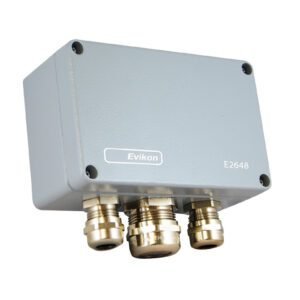
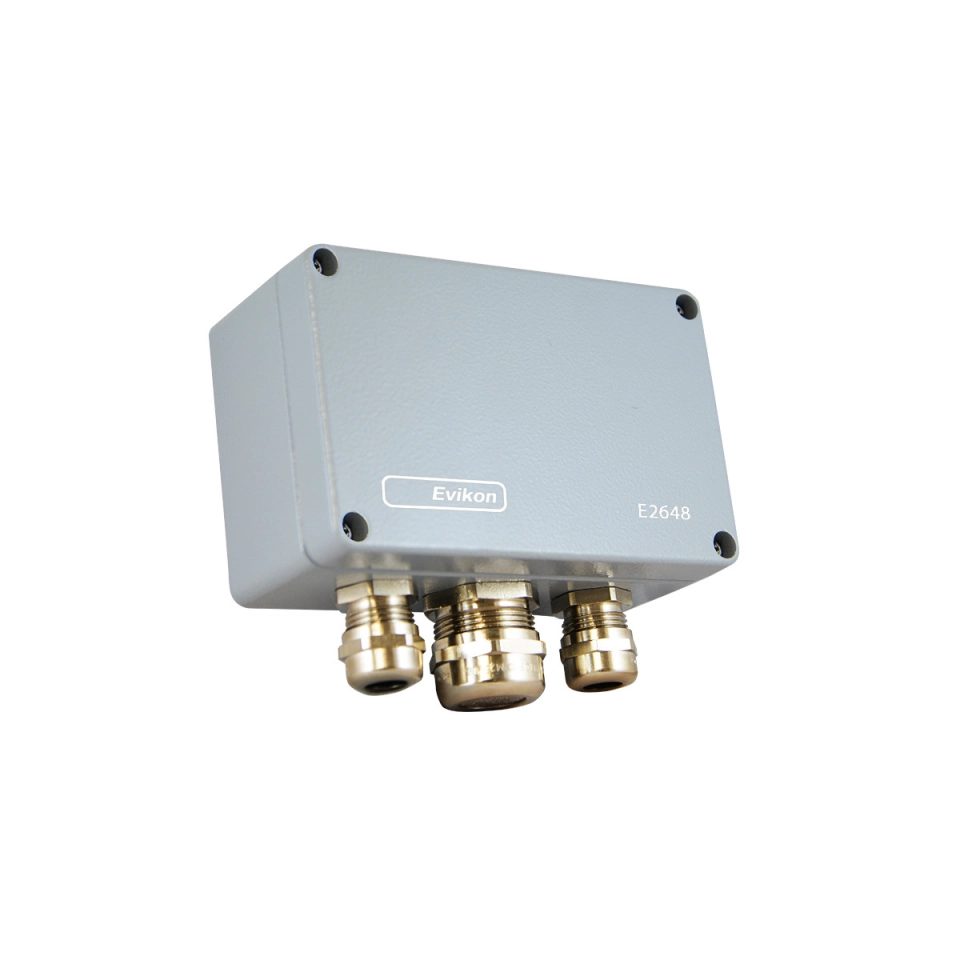
Description
| Specification | Details |
|---|---|
| Detected Gases | Halocarbon refrigerants (HFC, CFC, HFO) |
| Default Calibration | R-404a |
| Sensor Type | Metal-oxide semiconductor |
| Sampling Method | Diffusion |
| Detection Ranges | 0…1000 ppm / 0…2500 ppm |
| Resolution | 1 ppm |
| Sensor Lifetime | > 5 years |
| Power Supply | 12…36 VDC (default); 24 VAC or 230 VAC options |
| Digital Interface | RS485, Modbus RTU |
| Analog Outputs | 2 × 4-20 mA / 0-10 V, user settable |
| Output Relays (Option) | 2 × SPST, 250 VAC / 30 VDC, 5 A max |
| Default Alarm Set-Points | ~100 ppm / 500 ppm |
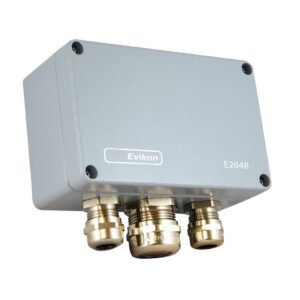
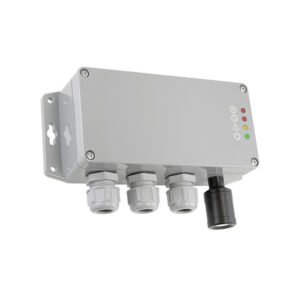
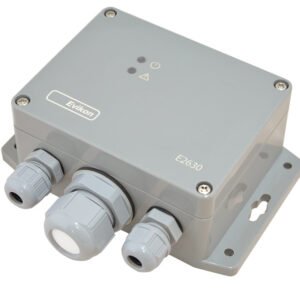
| Enclosure | Die-cast aluminium, wall mount, IP66 |
| Operating Conditions | -30…+70 °C, <95 % RH |
A refrigerant detector is a safety device used to detect leaks of cooling gases — especially hydrofluorocarbons (HFCs), chlorofluorocarbons (CFCs), and hydrofluoroolefins (HFOs) — from air-conditioning, HVAC, and refrigeration systems. These gases, while essential for cooling, can accumulate in enclosed areas and pose safety risks or equipment damage if undetected. A reliable refrigerants sensor continuously monitors ambient air and triggers alerts or control actions when concentrations exceed safe levels. This early warning helps facility managers protect workers, uphold regulatory compliance, and maintain system performance across industrial and commercial environments.
Air conditioners commonly use HFC refrigerants such as R-410A, R-32, and R-134a because they deliver effective cooling performance and reduced ozone depletion compared to older CFC refrigerants. These gases are widely adopted in commercial and industrial HVAC systems.
Refrigeration systems typically use refrigerants like R-134a, R-404A, and R-407C, chosen for efficiency and stability at low temperatures. Industrial cold storage may use high-capacity blends to meet specific cooling requirements.
Refrigerant gases are categorized into CFCs, HCFCs, HFCs, HFOs, and natural refrigerants (like ammonia or CO₂). Each type varies in environmental impact, safety classifications, and refrigerant pressure characteristics that influence system design and safety needs.
Why It Is Essential in the UAE & GCC
In the UAE and GCC, extreme heat and heavy reliance on cooling systems elevate the risk of refrigerant leaks. Sectors such as aerospace maintenance, pharmaceutical labs, and advanced manufacturing demand high safety standards. A professional refrigerant detector like the E2648-HFC helps ensure early leak detection, supports regulatory compliance, and protects high-value assets in environments where continuous cooling is mission-critical.