Description
| Parameter | Description |
|---|---|
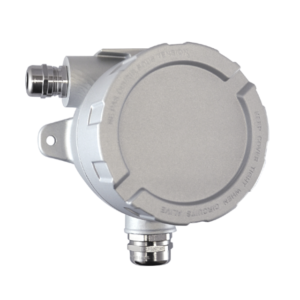
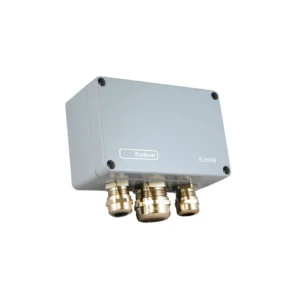
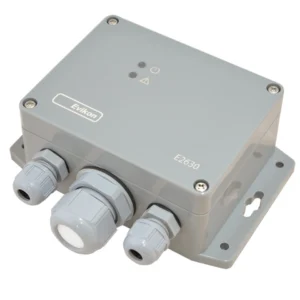
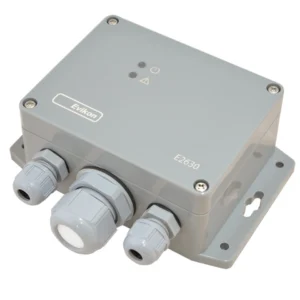
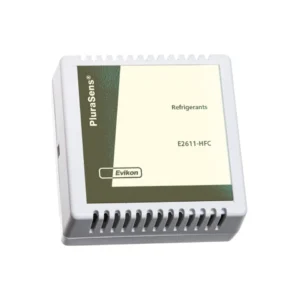
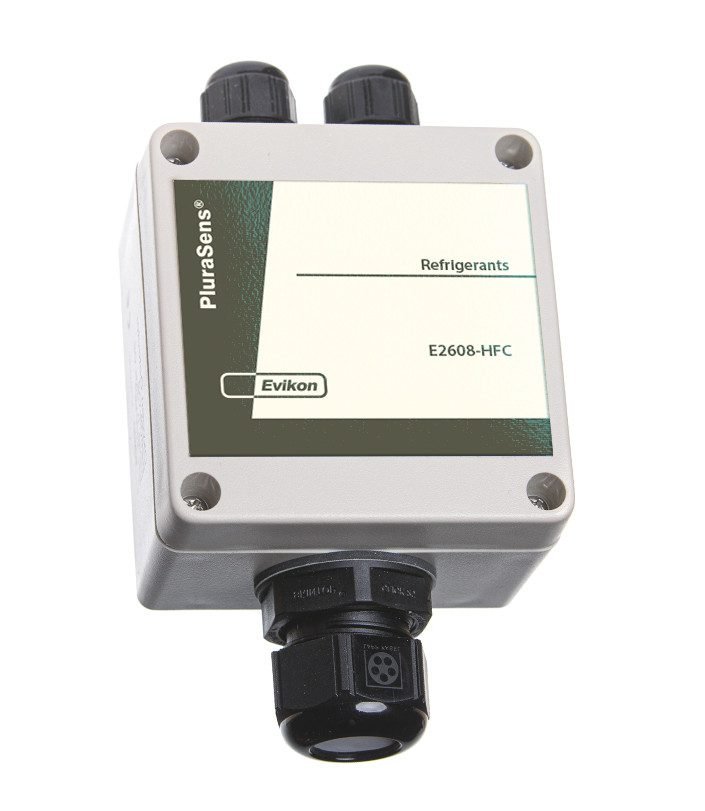
| Model | E2608-HFC |
| Detected Gases | Common refrigerants (HFC, HFO, HCFC, CFC, blends) |
| Sensor Type | Non-dispersive infrared (NDIR) |
| Detection Range | 0…2000 ppm or 0…10000 ppm (depending on model) |
| Accuracy | ±(3% of reading + 2% of full scale) |
| Output Signal | RS485 Modbus RTU |
| Power Supply | 11–30 V DC |
| Operating Conditions | -20°C to +60°C, 0–95% RH (non-condensing) |
| Housing Material | Durable ABS enclosure |
| Mounting Type | Wall-mounted |
| Dimensions | 90 × 100 × 35 mm |
| Weight | Approx. 160 g |
| Manufacturer | Evikon, Estonia |
Refrigerants are special fluids used in air conditioners, refrigerators, and cooling systems to absorb and release heat efficiently. They move through the system in a continuous cycle of evaporation and condensation. However, when refrigerants escape, they not only cause performance loss but also contribute to global warming. That’s why using a reliable refrigerant gas detection system like the E2608-HFC is crucial for maintaining safety and compliance in cooling facilities.
Most modern air conditioners use refrigerants like R410A, R32, or R134a. These gases circulate within the AC system, absorbing heat from indoor air and releasing it outside. Older systems used R22, which is now being phased out due to its ozone-depleting potential. Monitoring these gases with a refrigerant leak detector sensor ensures both safety and optimal energy efficiency, especially in large HVAC systems.
An AC refrigerant pressure sensor measures the pressure levels inside the air conditioning system to ensure correct operation. It helps detect overpressure or underpressure conditions that may indicate leaks or blockages. Integrating this with a refrigerant detection system allows for automated control and quick response, protecting expensive equipment from damage and maintaining efficient cooling performance.
Detecting leaks early prevents loss of cooling capacity and environmental damage. Common refrigerant leak detection methods include:
- Electronic leak detectors — use infrared or heated diode sensors for pinpoint accuracy.
- Ultrasonic detectors — identify high-frequency sounds caused by gas escaping.
- Soap bubble tests — simple but effective for smaller systems.
- Fixed refrigerant detection systems — like the Evikon E2608-HFC — provide continuous monitoring and automated alerts, ideal for industrial-scale facilities.
In the UAE and GCC, where cooling systems operate year-round, even a minor leak can lead to huge energy losses and equipment failure. District cooling plants, data centers, and supermarkets depend on uninterrupted refrigeration. Regulations by Dubai Municipality and Civil Defence demand leak monitoring in refrigeration and chiller plants. Investing in a reliable refrigerant detection system like the E2608-HFC ensures compliance, environmental responsibility, and long-term cost savings for industries in Dubai, Abu Dhabi, and the wider Gulf region.
Prevent refrigerant leaks, reduce energy costs, and ensure system efficiency with the Evikon E2608-HFC Refrigerants Detector.
Designed for precise refrigerant gas detection in HVAC, cold storage, and data centers, this sensor helps safeguard people, property, and the environment.
Safeguard your HVAC systems with the Evikon E2608-HFC Refrigerants Detector — the smart choice for precise and continuous refrigerant gas detection.
📞 Contact Gas Detectors UAE, your authorized distributor of Evikon, Estonia, and trusted refrigerant detection suppliers in the UAE, for expert guidance, bulk orders, and installation support.