


Table of Contents
What are combustible gases?

Combustible gases, also known as flammable gases, are substances that exist in a gaseous state at standard temperature and pressure and will ignite, burn, or explode when mixed with an oxidizer (like oxygen) and exposed to an ignition source.
The ability of a gas to combust is determined by its chemical properties and its concentration in the air. This is defined by two key limits:
- Lower Explosive Limit (LEL): The minimum concentration of the gas in the air that is capable of igniting. Below this level, the mixture is too “lean” to burn.
- Upper Explosive Limit (UEL): The maximum concentration of the gas in the air that will ignite. Above this level, the mixture is too “rich” (not enough oxygen) to burn.
Any concentration between the LEL and UEL is considered the flammable range and is highly dangerous.
Hydrogen (H₂)
- Properties: Hydrogen is the lightest element and is colorless, odorless, and highly flammable. It has an exceptionally wide flammable range (4% to 75% in air), making it dangerous across a broad range of concentrations. Because it is much lighter than air, it dissipates very quickly upwards in open spaces.
- Common Uses: Used in petroleum refining, ammonia production, and increasingly as a clean fuel in fuel cells.
We have a compiled a comprehensive article on Hydrogen Gas Leak Detection – Read it here!
Methane (CH₄)
- Properties: The primary component of natural gas, methane is colorless, odorless, and lighter than air. In the event of a leak, it will rise and collect in high areas and near ceilings.
- Common Uses: Widely used for heating and cooking in homes, generating electricity in power plants, and as a chemical feedstock.
Acetylene (C₂H₂)
- Properties: Acetylene is a colorless, highly flammable gas with a garlic-like odor in its commercial form. It is unstable in its pure form at high pressure and is typically stored dissolved in acetone. It has a very wide explosive range (2.5% to 81%).
- Common Uses: Used extensively in welding and cutting torches (oxy-acetylene) because it produces a very high-temperature flame. It is also a building block for the synthesis of other chemicals.
Propane (C₃H₈)
- Properties: A component of Liquefied Petroleum Gas (LPG), propane is colorless and odorless, though an odorant is added for safety. It is significantly heavier than air, meaning it will sink and accumulate in low-lying areas like basements or drains if a leak occurs.
- Common Uses: Used for home heating, barbecue grills, portable stoves, and as a fuel for some vehicles.
Butane (C₄H₁₀)
- Properties: Butane is also a component of LPG and shares many properties with propane. It is a highly flammable, colorless gas that is also heavier than air and will pool at ground level.
- Common Uses: Commonly found in cigarette lighters, as an aerosol propellant, and in portable camping stoves.
What are the dangers of combustible gas leaks?
The main dangers posed by hydrogen, methane, acetylene, propane, and butane in industrial applications primarily revolve around fire, explosion, and asphyxiation. Each gas also has unique characteristics that contribute to its specific hazards.

Common Industrial Dangers (Fire, Explosion, Asphyxiation)
- Fire and Explosion Hazard (Flammability): All five gases are highly flammable and can form explosive mixtures with air when their concentration is between their Lower Explosive Limit (LEL) and Upper Explosive Limit (UEL). Ignition can be caused by a spark, static electricity, hot surfaces, or open flames.
- Hydrogen and Acetylene are particularly dangerous due to their very wide flammability ranges and low ignition energy, meaning they can ignite very easily.
- Hydrogen and Acetylene are particularly dangerous due to their very wide flammability ranges and low ignition energy, meaning they can ignite very easily.
- Asphyxiation & Oxygen Displacement Hazard: All are non-toxic simple asphyxiants. In high concentrations, they can displace oxygen in the air, especially in confined spaces or low-lying areas (for heavier-than-air gases), leading to suffocation (asphyxia), unconsciousness, and death.
Gases such as methane and propane can displace oxygen in the air. - High-Pressure Hazards: These gases are often stored and transported under high pressure (or as liquefied gases), posing a risk of rupture or Boiling Liquid Expanding Vapor Explosions (BLEVEs) if containers are exposed to heat or fire.
- Frostbite: When stored as liquefied gases (like propane and butane), contact with the rapidly expanding gas or vaporizing liquid can cause severe frostbite or “cold burn” to the skin and eyes.
- Toxic Byproducts of Fire
- When combustible gases ignite, they often release toxic fumes like carbon monoxide.
- These secondary gases pose serious health hazards even after the initial fire or explosion is controlled.
Carbon monoxide poses a significant danger to human health. Read our blog here to know all about about carbon monoxide monitoring in the UAE.
Specific Dangers by Gas
| Gas Type | Specific Danger |
| Hydrogen (H2) | Extremely low ignition energy and wide flammability range (4% to 75% in air), making it easy to ignite. It is colorless, odorless, and very light, dispersing quickly but making leaks hard to detect without sensors. It can cause hydrogen embrittlement in certain metals, compromising the integrity of equipment and infrastructure. |
| Methane (CH4) | The primary component of natural gas. It is colorless and odorless (commercial gas is often odorized), making leaks difficult to detect. As a lighter-than-air gas, it tends to accumulate in elevated areas within enclosures. It is a major greenhouse gas, contributing to environmental risk. |
| Acetylene (C2H2) | Uniquely hazardous because it is unstable and can undergo explosive decomposition even in the absence of air or oxygen, particularly when compressed, overheated, or subjected to mechanical shock. It has a very wide flammability range (2.5% to 81% in air). It is typically stored dissolved in a solvent (like acetone) in a porous mass within cylinders to stabilize it. |
| Propane (C3H8) | Stored as a liquefied petroleum gas (LPG). Vapors are heavier than air, meaning they will accumulate in low-lying areas (pits, trenches, basements), increasing the risk of fire and explosion if an ignition source is present. |
| Butane (C4H10) | Also an LPG. Similar to propane, its vapors are heavier than air and will accumulate in low-lying, poorly ventilated spaces, presenting a significant explosion risk. |
In summary, the high flammability and potential for explosion are common to all, but the specific physical properties (density, ignition energy, and chemical stability) dictate their unique safety challenges in industrial settings.
Why Combustible Gas Detection Matters in the UAE & GCC?
The UAE’s industrial landscape, particularly the dominance of the Oil and Gas sector and significant infrastructure development, dictates where the dangers of these flammable gases are most pronounced and necessitates strict adherence to international and local regulations like the UAE Fire and Life Safety Code.
Here is an industry-wise breakdown of the dangers:
1. Oil, Gas, and Petrochemical Sector (Methane, Propane, Butane, Hydrogen)
The Oil and Gas industry is the largest user and handler of these gases, making it the highest-risk area.
| Gas/Industry Component | Specific Dangers in UAE Context |
| Methane (CH4) / Natural Gas | Risk: Methane is the primary component of natural gas, which is extracted, processed, and distributed across the UAE for power generation and industrial use. Leaks from pipelines, wells, or processing plants pose a severe explosion hazard in the presence of an ignition source. |
| Propane and Butane (LPG) | Risk: These are by-products and feedstocks used extensively in petrochemical complexes (like Ruwais). Their storage in large quantities as liquefied gases presents the catastrophic risk of a Boiling Liquid Expanding Vapor Explosion (BLEVE) if a storage vessel is exposed to fire. |
| Hydrogen (H2) / Refining | Risk: Used heavily in oil refining processes (e.g., hydrocracking, hydrotreating). Low ignition energy and high diffusivity mean leaks are highly likely to ignite quickly. The push for Blue and Green Hydrogen production in the UAE (to be a top 10 producer by 2031) introduces new, large-scale embrittlement and high-pressure storage risks across the emerging supply chain. |
| General Risks | Confined Space Hazard: Working in storage tanks, vessels, or pits where gas concentrations can build up, leading to asphyxiation or creating an explosive atmosphere. Hot Climates: High ambient temperatures increase the internal pressure of stored gases, exacerbating the risk of leaks and rupture. |
2. Construction and Heavy Industry (Acetylene, Propane)
The UAE’s ongoing infrastructure boom relies heavily on gas for metalwork and construction site operations.
| Gas/Industry Component | Specific Dangers in UAE Context |
| Acetylene (C2H2) | Risk: Primarily used for oxy-fuel welding and cutting on construction sites, shipyards, and fabrication shops. The specific danger of explosive decomposition (even without air) due to high pressure, shock, or heat (e.g., from fire) necessitates stringent handling and storage rules for the specialized porous-filled cylinders. |
| Propane/LPG | Risk: Used for temporary heating, drying, and powering industrial forklifts. The primary risk is the accumulation of the heavier-than-air vapor in trenches, basements, or below-grade construction areas, leading to an unseen, potent explosive mixture. |
| General Risks | Handling and Transport: High-risk manual handling of cylinders in busy, high-rise construction environments, increasing the chance of cylinder damage, leaks, or valve failure. |
3. Commercial and Hospitality (Propane, Butane)
LPG (Propane and Butane) is widely used for cooking and heating in commercial kitchens, hotels, and residential complexes across all Emirates.
| Gas/Industry Component | Specific Dangers in UAE Context |
| Propane/Butane (LPG) | Risk: The widespread use of central gas systems and individual cylinders for commercial cooking creates a risk of leaks in kitchens or storage cages. A leak in a poorly ventilated, low-lying storage area (since the vapor is heavier than air) can quickly lead to a massive fire or explosion affecting a densely populated building (e.g., a hotel or apartment tower). |
| Safety Compliance | Risk: Compliance is critical. Local authorities (e.g., Dubai Civil Defence, Abu Dhabi Civil Defence) have strict regulations (like DM-HSD_GU53) on cylinder storage specifications, ventilation, and fire suppression systems, which must be rigorously followed to mitigate these high-impact risks. |
Guidelines, Regulations, and Penalties for Non-compliance towards Safety Measures

The United Arab Emirates and the broader GCC countries have a robust and stringent system of guidelines, rules, and significant penalties for non-compliance with measures intended to mitigate flammable gas hazards.
The regulatory framework is primarily anchored in national-level laws and enforced by local Civil Defence authorities, which hold substantial power to fine, suspend, and close operations.
Here is a detailed breakdown of the legal and punitive landscape:
1. Regulatory Foundation: The Civil Defence Framework
The primary body responsible for enforcing safety measures related to flammable and hazardous materials, including gases, is the Civil Defence Authority in each Emirate (e.g., Dubai Civil Defence – DCD, Abu Dhabi Civil Defence – ADCDA).
The UAE Fire and Life Safety Code of Practice
This is the cornerstone document that sets the technical specifications for gas systems (LPG, Natural Gas, etc.), storage, ventilation, and mandatory safety equipment. Failure to comply with the technical requirements of this code is the basis for most penalties.
Cabinet Resolution No. (24) of 2012
This resolution forms the legal basis for the organization of Civil Defence services and grants the authorities judicial power to conduct inspections, issue violation notices, and impose penalties.
2. Specific Rules and Mandatory Measures for Gas Hazards
Non-compliance is often linked to the failure to implement these mandatory preventative measures:
| Requirement | Non-Compliance Hazard |
| Approved Design & Installation | Gas systems (central or cylinder) must be designed and installed only by Civil Defence-approved contractors, ensuring adherence to pipe specifications, pressure regulation, and location/separation distances. |
| Gas Detection Systems | Installation and maintenance of calibrated gas leak detectors (connected to the central fire alarm system) are mandatory in commercial kitchens, industrial facilities, and central gas storage areas. |
| Cylinder Storage Protocols | Strict rules prohibit the storage of LPG/gas cylinders in residential areas, basements, or unventilated spaces. Storage must be outdoors, secured, protected from direct sunlight, and clearly segregated from incompatible materials. |
| Central Gas Systems | In many areas, particularly Abu Dhabi and Dubai, there is an aggressive push to ban individual LPG cylinders in buildings equipped with central gas systems, making their use a punishable offense. |
| Regular Maintenance & Certification | Facility owners are obligated to have Annual Maintenance Contracts (AMC) with certified providers for all gas and fire safety systems, ensuring regular testing and certification. |
3. Detailed Penalties for Non-Compliance
Penalties are severe and escalate based on the violation’s nature, its gravity, and whether it is a repeat offense. They move from financial fines to the ultimate sanction of business closure and legal prosecution in the event of an accident.
A. Financial Fines
The most common penalty is a financial fine, which can be substantial:
| Violation Type | Penalties (Examples from Abu Dhabi/Dubai) |
| Failure to maintain essential safety systems | Fine for tampering with, modifying, or failing to maintain a mandatory fire suppression or alarm system. |
| Illegal Gas Cylinder Usage/Sale | Fines for retail sale of cylinders or using cylinders in a central gas building can be different amounts for a first offense, escalating to higher fines for subsequent violations. |
| Lack of Civil Defence License/Certificate | Businesses found operating without the required Civil Defence license or compliance certificate often face an initial penalty. |
| Accident Cost Recovery | If a fire or explosion occurs due to proven lack of fire prevention measures, the facility owner may be charged fines to cover the costs of firefighting and rescue operations. |
B. Administrative Sanctions and Closure
Beyond monetary fines, the Civil Defense and Economic Development Departments can impose operational restrictions:
- Suspension or Closure: Facilities with high-risk gas violations may be issued an order to isolate and halt the gas system or face immediate closure of the entire business until all necessary corrective measures are implemented and re-inspected.
- Permit Revocation: Non-compliant facilities risk the cancellation of their operating license from the relevant government bodies (e.g., Department of Economic Development and Civil Defense).
- Mandatory Remediation: The facility owner is given a strict deadline (e.g., two weeks) to implement corrective measures outlined by inspectors, often necessitating the hiring of approved contractors at the owner’s expense.
C. Criminal and Liability Penalties
In the most severe cases, where non-compliance leads to an incident:
- Criminal Charges: If a fire, explosion, or gas leak results in death, serious injury, or major property destruction, the negligent individuals (owners, managers, or contractors) can face criminal prosecution under the UAE Penal Code for negligence, manslaughter, or causing an intentional/unintentional fire.
- Civil Liability: The responsible parties face civil lawsuits for damages, compensation, and medical costs from victims and their families. Insurance coverage may also be voided due to breach of safety regulations.
4. For Countries in the GCC
While the UAE has the most publicly detailed penalty structures through its Civil Defence, all GCC countries (Saudi Arabia, Qatar, Bahrain, Kuwait, and Oman) operate under similarly strict frameworks for hazardous materials, aligning with international standards (like NFPA) and the overarching Gulf Standards (G-MARK) for product safety.
- Saudi Arabia (SASO/Civil Defence): Enforces strict compliance on industrial safety, with significant financial penalties and customs blocks for non-certified or non-compliant equipment, similar to the UAE’s MoIAT/ESMA regulations.
- Harmonization: The regional goal is to harmonize standards for dangerous goods and materials, meaning a serious violation in one GCC country is generally viewed and penalized with high severity across the board.
What to do do when a combustible gas leak happens?
The most critical thing to do is to prevent any ignition from happening.
Here is a detailed, step-by-step guide on what to do when a combustible gas leak is suspected:
Phase 1: Immediate Reaction & Ignition Control
Your first priority is to prevent a spark that could ignite the gas.
- DO NOT Operate Electrical Switches:
- Do NOT turn lights, fans, or any appliance ON or OFF. A small electrical spark from a switch is enough to ignite the gas-air mixture.
- Do NOT turn lights, fans, or any appliance ON or OFF. A small electrical spark from a switch is enough to ignite the gas-air mixture.
- Eliminate All Ignition Sources:
- Do NOT use matches, lighters, or any open flame.
- Do NOT use a mobile phone, landline phone, or any device that could generate a spark inside the building or near the source of the leak.
- If safe to do so, immediately turn off all running stoves or ovens.
- Activate an Audible Warning (if safe):
- If you have a manual, non-electrical alarm (like a mechanically-operated bell or a designated verbal warning), use it.
- Crucially, do NOT use an electrical fire alarm pull station unless the facility’s emergency plan explicitly states it’s safe for gas leaks.
- Open Doors and Windows (Ventilate):
- If you can open them without flipping a switch or spending extra time, open exterior doors and windows to allow the gas to disperse.
- If you can open them without flipping a switch or spending extra time, open exterior doors and windows to allow the gas to disperse.
Phase 2: Evacuation and Isolation
Your second priority is to get everyone to safety and stop the gas flow.
- Evacuate Immediately:
- Leave the area/building immediately. Do not stop to collect belongings.
- Assist any persons with special needs.
- DO NOT USE ELEVATORS. Always use the stairs.
- Shut Off the Gas Supply (Only if you know where it is and it is safe):|
- If you know the location of the main gas supply valve (e.g., the red-handled valve for a central gas system or the cylinder valve for LPG), and you can reach it quickly and safely, turn it off to stop the flow of gas.
- If you know the location of the main gas supply valve (e.g., the red-handled valve for a central gas system or the cylinder valve for LPG), and you can reach it quickly and safely, turn it off to stop the flow of gas.
- Move to a Safe Location:
- Proceed to your designated Emergency Assembly Point (EAP).
- Ensure the EAP is upwind and a safe distance away from the building to avoid being exposed to the dispersing gas cloud.
Phase 3: Contacting Emergency Services
This must be done from a safe distance, away from the leak.
- Call Emergency Services:
- Call the local emergency number.
- Clearly state that you suspect a Combustible Gas Leak and provide the exact location and a description of what you smell or hear.
- Call the Gas Supplier:
- Contact your utility provider and inform them of the leak.
- Contact your utility provider and inform them of the leak.
- Do Not Re-Enter:
- Wait for the emergency services to arrive.
- Do NOT re-enter the building for any reason until an authorized official has tested the atmosphere and declared the area safe.
How to Detect a Combustible Gas Leak
All five gases—hydrogen (H2), methane (CH4), acetylene (C2H2), propane (C3H8), and butane (C4H10)—are flammable and are primarily detected using specialized gas sensors that measure concentration relative to the Lower Explosive Limit (LEL).
The best detection method often depends on the gas’s properties (like density) and the environment (residential vs. industrial).
Common Detection Methods
These technologies are used in both fixed and portable detectors to measure the gas concentration, usually as a percentage of the LEL (Lower Explosive Limit), which is the minimum concentration required to ignite in air.
| Sensor Type | Working Principle | Target Gases | Use Case |
| Catalytic Bead (Pellistor) | Heats up a bead coated with a catalyst; the gas combusts on the surface, raising the bead’s temperature and changing its electrical resistance. | Methane, Propane, Butane, Acetylene, Hydrogen. | General combustible gas detection. |
| Non-Dispersive Infrared (NDIR) | Measures the gas’s absorption of specific infrared light wavelengths. | Methane, Propane, Butane, Acetylene (Hydrocarbons). | Highly accurate, less prone to “poisoning,” but cannot detect Hydrogen. |
| Electrochemical | Measures the electrical current produced when the gas reacts with a chemical on the sensor’s surface. | Primarily used for specific gases like H2 or CO. | Highly selective, often preferred for H2. |
| Thermal Conductivity | Measures how well the gas conducts heat compared to air. | Hydrogen (H2), Methane, high concentrations of other gases. | Good for H2, less sensitive than catalytic for hydrocarbons. |
| Optical Gas Imaging (OGI) | Uses specialized thermal cameras to visualize hydrocarbon gas clouds. | Methane, Propane, Butane (Hydrocarbons). | Ideal for remote, wide-area industrial inspection. |
Featured Product: Fixed Multi-Gas LEL Detector – Detects Hydrogen, Methane, Acetylene, Propane and Butane.
To meet the demanding requirements of industrial safety in the UAE and GCC, GasDetectors.ae proudly features the Evikon E2670-LEL Flameproof Combustible Gas Detector-Transmitter.
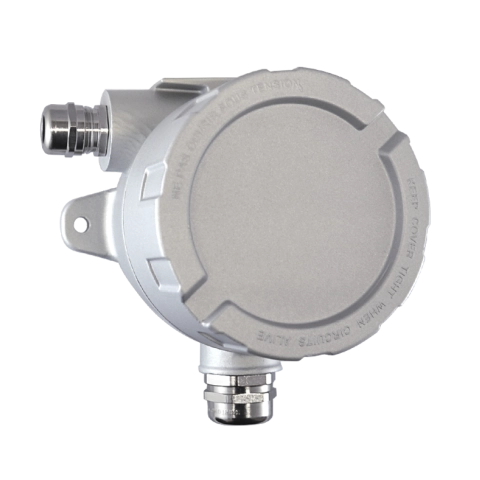
This device is engineered for maximum reliability in hazardous locations:
| Feature | Detail |
| Detection Target | Combustible gases, including Methane (CH4), Propane, Butane, Hydrogen, and Acetylene. |
| Measurement Range | 0–100% LEL (Lower Explosive Limit). |
| Hazard Rating | Flameproof design, certified for use in ATEX Zones 2 and 22, ensuring integrity in potentially explosive atmospheres. |
| Technology | Features high-reliability catalytic bead (Pellistor) or Metal-Oxide-Semiconductor (MOS) sensing technology. |
| Integration | Equipped with industry-standard outputs, including 4-20 mA and RS485 Modbus RTU, for seamless connection to your existing safety and control systems (SCADA/BMS). |
The E2670-LEL is the perfect fixed solution for any facility requiring uncompromising, continuous monitoring of combustible gas risks.
Gas-Specific Detection Strategies
The strategy for detection is heavily influenced by the gas’s density relative to air (Air = 1.0).
| Gas | Relative Density (Air = 1.0) | LEL in Air (% by Vol.) | Key Detection Considerations |
| Hydrogen (H2) | 0.07 | 4.0% | Very light; rises quickly. Requires Electrochemical or Thermal Conductivity sensors, as it cannot be detected by NDIR sensors. |
| Methane (CH4) | 0.55 | 5.0% | Very light (Natural Gas); rises quickly and accumulates at the ceiling or highest point. Detected by Catalytic or NDIR sensors. |
| Acetylene (C2H2) | 0.9 | 2.5% | Slightly lighter than air. Extremely wide explosive range (LEL 2.5% to UEL 81%). Requires high-quality, calibrated catalytic or NDIR sensors. |
| Propane (C3H8) | 1.55 | 2.1% | Heavier than air; sinks and collects at the floor or in basements. Detected by Catalytic or NDIR sensors. |
| Butane (C4H10) | 2.0 | 1.9% | Much heavier than air; sinks and collects at the floor or in basements. Detected by Catalytic or NDIR sensors. |
Non-Equipment Detection (Odor)
- Methane (Natural Gas), Propane (LPG), and Butane (LPG) are naturally odorless, but gas suppliers add a potent chemical odorant (usually Mercaptan) that smells like rotten eggs or sulfur, allowing for detection by smell.
- Hydrogen and Acetylene typically do not have an added odorant, so detection relies almost entirely on specialized equipment.
Where can you buy LEL Combustible Gas Detectors in UAE and the GCC?
Look no further than GasDetectors.ae. Based in Dubai, we are the leading specialized company dedicated to enhancing industrial and commercial safety across the United Arab Emirates and the wider Gulf Cooperation Council region. In environments where the risk of leaks from explosive gases like Methane, Propane, Acetylene, and Hydrogen is critical, our mission is to provide unparalleled expertise to protect both personnel and assets.
We are Authorized Distributor of Evikon Gas Detectors Company in Estonia.
We are specialists in the entire lifecycle of Fixed Gas Detection Systems. Our core services include:
- Expert Consultation: Providing professional guidance to assess your specific risks and designing bespoke fixed gas detection solutions that comply with rigorous international and local standards.
- Certified Supply: Offering a comprehensive range of high-quality, certified fixed gas detectors for all types of combustible and toxic gases.
- Installation & Commissioning: Executing professional, certified installation and commissioning services to ensure your system is operational, accurate, and seamlessly integrated with your facility’s safety infrastructure.
At GasDetectors.ae, we don’t just supply equipment—we deliver peace of mind, ensuring your gas monitoring infrastructure is robust, reliable, and always ready to respond to a threat.
Ready to Secure Your Facility?
Contact us today to schedule a consultation and receive a quote for the fixed gas detection system you need to meet the highest safety standards in the UAE.