


1. Introduction: Why Carbon Monoxide Monitoring Matters
Basement car parks and enclosed parking garages are convenient, but they also pose hidden dangers. One of the most serious threats is carbon monoxide (CO) — an invisible, odorless gas produced by vehicle exhaust. It is a silent killer, as it can cause carbon monoxide poisoning without anyone even being aware of its presence.
When inhaled, CO bonds with hemoglobin in the blood, preventing oxygen from being transported to vital organs. Symptoms of poisoning can range from headaches and dizziness to unconsciousness and death. Without proper monitoring, CO can quickly accumulate, endangering occupants and violating Dubai car park standards and Ministry of Civil Defense regulations.
All above are critical concerns, especially in enclosed spaces like underground car parks and multi-story garages, where natural ventilation is limited. As experienced engineers and professionals, it is our responsibility to implement effective safety measures to prevent this invisible threat.
2. Understanding Carbon Monoxide in Car Parks
Carbon monoxide forms when fuel does not burn completely in vehicles. Unlike other pollutants, CO cannot be detected by human senses. Symptoms of exposure include headache, dizziness, nausea, and in extreme cases, death due to carbon monoxide poisoning.

Key sources of carbon monoxide build-up in car parks include:
- Exhaust gases from idling cars.
- Poorly ventilated enclosed parking areas.
- Blocked or faulty car park ventilation systems.
3. Risks of Carbon Monoxide in Enclosed Parking Areas
The presence of a single running car in a confined space is enough to cause CO levels to rise to dangerous concentrations. In a busy parking garage, the risk is constant and cumulative. A quick response and accurate carbon monoxide monitoring system for car parks is not just a regulatory requirement – it is an essential component of a building’s health and safety infrastructure.
Failing to address CO exposure in car parks has consequences:
- Health Risks – Prolonged exposure can lead to poisoning or even fatalities.
- Legal Liability – Non-compliance with UAE air quality and Civil Defense standards can result in penalties.
- Operational Disruption – Alarms, evacuations, and safety shutdowns can halt normal use of parking garages.
Installing a carbon monoxide sensor is the first step toward a safe and compliant car park. These sensors continuously sample the air, providing real-time data on CO concentration. When levels exceed a pre-set limit, an alarm is triggered, signaling the need for immediate action. These detectors can also be integrated into the car park’s ventilation system, offering an automated solution for enclosed parking air quality control.
This is why facility managers, MEP contractors, and fire fighting companies must ensure reliable carbon monoxide detectors are installed.
4. Carbon Monoxide Monitoring for Car Parks: How It Works
A modern carbon monoxide monitoring for car parks system operates on a simple but highly effective principle: proactive ventilation. The system consists of a network of strategically placed carbon monoxide sensor devices, a central control panel, and the car park’s ventilation fans.
Here’s a step-by-step breakdown of how it works:
- Detection: A CO sensor continuously measures the CO concentration in the air.
- Signal: When the CO level surpasses the first threshold (e.g., 25 ppm), the sensor sends a signal to the central control panel.
- Ventilation Activation: The control panel receives the signal and activates the ventilation fans at a low speed to begin clearing the air. This is a smart approach that reduces energy consumption.
- Alarm: If CO levels continue to rise and reach a second, higher threshold (e.g., 35 ppm), the system triggers a carbon monoxide alarm, which can include visual strobe lights and loud sirens to alert people to the immediate danger. At this point, the ventilation fans may also switch to a higher speed for a rapid air change.
- Normalization: The fans run until CO levels drop to a safe range, at which point the system deactivates the alarms and reduces fan speed or turns them off, conserving energy.
This type of automated ventilation control systems is the only solution for parking garage CO detection and management, ensuring a safe environment while minimizing operational costs.
5. UAE Regulations & Compliance for Car Park Safety
In the UAE, authorities such as the Ministry of Civil Defense mandate CO monitoring in enclosed parking garages. Compliance ensures:
- Adequate CO sensor coverage.
- Connection to ventilation systems.
- Maintenance records for inspections.
For contractors and developers, installing compliant carbon monoxide monitoring systems prevents legal issues and boosts building safety ratings.
UAE regulations for car park safety focus on ensuring adequate ventilation with carbon monoxide (CO) monitoring and alarms, implementing fire safety measures like smoke clearance ventilation, and adhering to technical specifications for construction and design, all overseen by authorities like Dubai Municipality and the RTA. Compliance involves obtaining necessary approvals, inspections, proper signage, user education, and paying fines for violations.
6. Featured Solution: Evikon E2608-CO
To effectively manage carbon monoxide safety in a car park, you need a solution that is both reliable and technologically advanced. Our featured product, the Evikon E2608-CO Carbon Monoxide Gas Detector, is the ideal solution for businesses in the UAE seeking to protect their occupants and meet regulatory requirements. Shop our most reliable solution for car park carbon monoxide detection, click here Evikon E2608-CO Carbon Monoxide Gas Detector.
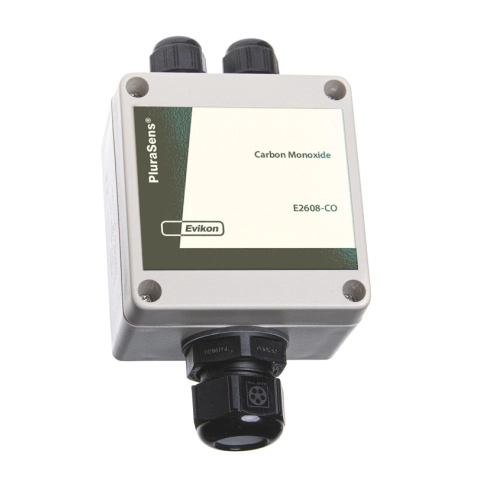
Key Benefits:
- Protects against carbon monoxide poisoning with fast and accurate detection.
- Designed for parking garages and basement car parks.
- Helps achieve compliance with Dubai car park standards.
Technical Features:
- High-Accuracy Electrochemical Sensor: The heart of the E2608-CO is a long-life electrochemical sensor, designed to provide a highly accurate carbon monoxide detector reading with a quick response time. This ensures an early warning against dangerous CO buildup.
- Integrated Relays for Automation: The detector comes with two integrated relays, allowing for direct, automated control of car park ventilation fans. This feature helps optimize energy consumption by running fans only when necessary.
- Seamless BMS Integration: The E2608-CO easily integrates into existing Building Management Systems (BMS) or fire alarm control panels via standard analog outputs and a digital Modbus interface. This makes it a perfect fit for modern smart buildings.
- Robust and Durable: Housed in a durable, IP65-rated plastic case, the device is built to withstand the harsh conditions of a car park, including dust, humidity, and temperature fluctuations.
- Flexible Installation: It is available in both wall-mount and duct-mount versions, providing flexible installation options for any car park layout.
This device represents the pinnacle of gas detection technology, combining precision, durability, and smart functionality. You can learn more about its technical features and benefits on the official Evikon E2608-CO Carbon Monoxide Gas Detector product page.
7. Benefits of Installing CO Detectors in Car Parks
- People Safety – Protects drivers, staff, and visitors from toxic exposure.
- Automatic Ventilation Control – Saves energy by only running fans when CO levels rise.
- Regulatory Compliance – Meets Dubai car park standards and UAE safety codes.
- Reduced Liability – Minimises risks for building owners and facility managers.
8. Integration with Ventilation Control Systems

Modern carbon monoxide monitors link with ventilation control systems to:
- Trigger exhaust fans automatically.
- Send alerts to building management systems.
- Maintain healthy enclosed parking air quality efficiently.
This integration is crucial for both safety and energy efficiency.
9. Applications Beyond Car Parks
While critical for basement car parks, the Evikon E2608-CO is also used in:
- Tunnels
- Warehouses with vehicle fleets
- Loading docks
- Workshops with combustion engines
10. Frequently Asked Questions (FAQs)
What is Carbon Monoxide Monitoring for Car Parks?
It is the process of using carbon monoxide detectors and sensors to continuously measure and control CO levels in parking garages.
Why is CO dangerous in car parks?
CO is odorless and invisible. Without carbon monoxide alarms, drivers and staff can be exposed to dangerous concentrations, leading to carbon monoxide poisoning.
What is the safe level of CO in a car park?
Most standards require levels below 25–50 ppm. Exceeding these levels should trigger carbon monoxide alarms and activate ventilation systems.
How do CO detectors work in car parks?
They use electrochemical CO sensors to measure ppm levels, sending data to a controller. If unsafe levels are reached, alarms and fans are activated to exhaust CO.
Where should CO sensors be placed in a car park?
They should be installed near exhaust points, ventilation ducts, and areas with frequent vehicle idling.
Are CO detectors mandatory in UAE car parks?
Yes. Dubai car park standards and Ministry of Civil Defense regulations require approved CO monitoring systems in enclosed garages.
How often should CO detectors be serviced?
Routine calibration and inspection every 6–12 months is recommended.
Can CO monitoring save energy?
Yes. By linking CO sensors with fans, ventilation only runs when needed, cutting unnecessary energy use.
What product is recommended for CO monitoring in UAE car parks?
The Evikon E2608-CO Carbon Monoxide Gas Detector is a proven solution, trusted in the GCC region.
Who supplies Evikon CO detectors in UAE?
Gas Detectors UAE is the authorised distributor of Evikon in Dubai and across the GCC.
Conclusion
Carbon Monoxide Monitoring for Car Parks is critical to protect lives, maintain compliance, and optimise energy use in enclosed parking facilities.
At Gas Detectors UAE, we are the Authorised and Exclusive Distributor of Evikon, Estonia.
👉 Don’t wait for unsafe CO levels to put your staff, customers, or business at risk.
Contact us today for expert consultation, RFQs, and to order the Evikon E2608-CO Carbon Monoxide Gas Detector — the trusted solution for carbon monoxide monitoring in UAE car parks.