
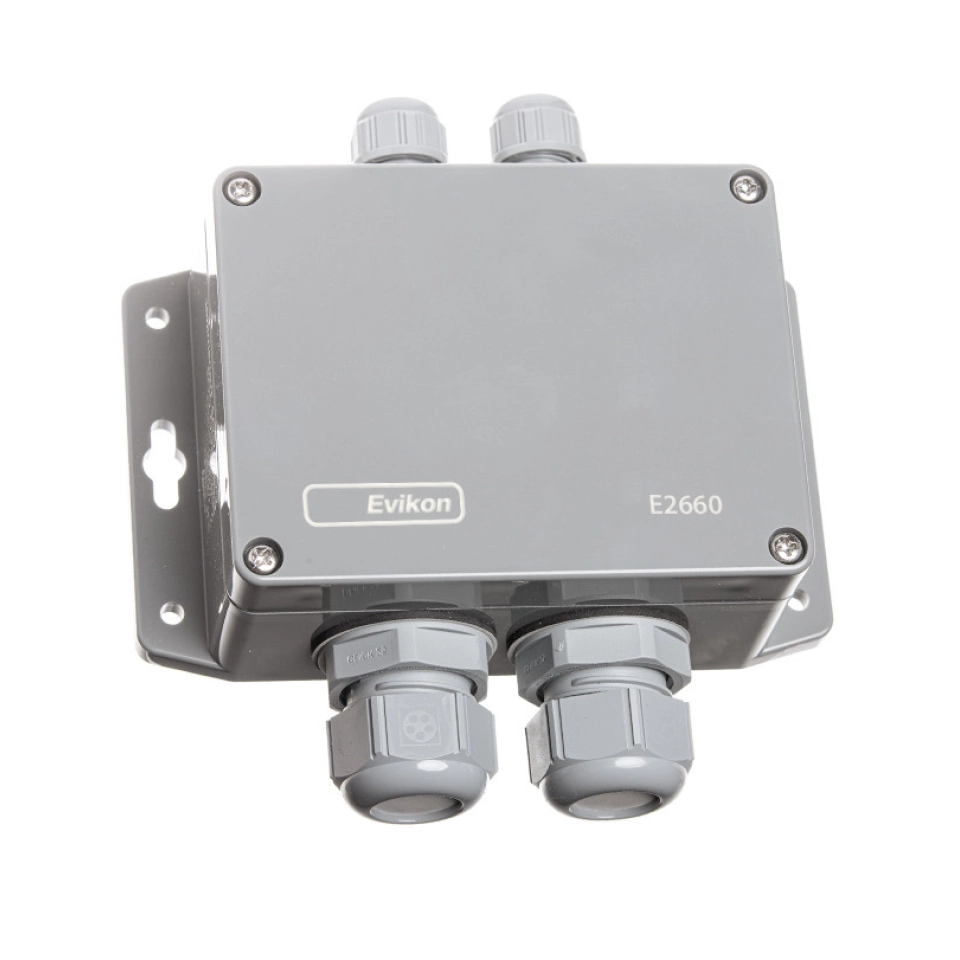
Description
| Specification | Details |
|---|---|
| Detected Gases | Hydrogen, Methane, Acetylene, Propane, Butane (0–100% LEL) |
| Default Calibration | Methane (CH₄) |
| Sensor Type | Metal-oxide semiconductor |
| Sampling Method | Diffusion |
| Detection Range | 0…100% LEL |
| Resolution | 0.1% LEL |
| Sensor Lifetime | > 5 years |
| Power Supply | 12…36 VDC (default); 24 VAC or 230 VAC options |
| Analog Outputs | 2 × 4-20 mA / 0-10 V, user settable |
| Digital Interface | RS485, Modbus RTU |
| Output Relays | 2 × SPST relay outputs (optional) |
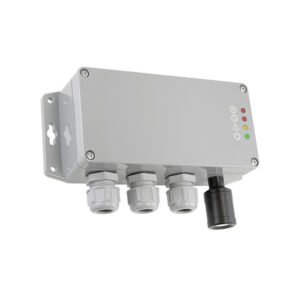
| Enclosure | IP65 wall mount |
| Operating Conditions | -40…+70 °C, 0…95 % RH |
What Is a Combustible Gas Transmitter?
A combustible gas transmitter is a safety device that continuously monitors the level of flammable gases in the air, such as methane, propane, hydrogen, and other hydrocarbons. When gas levels approach dangerous concentrations near the lower explosive limit (LEL), the transmitter sends signals to alarm systems, controllers, or ventilation equipment. This early warning helps protect people, processes, and property by triggering actions before an explosive condition can develop. Reliable combustible gas sensors are essential in industrial, laboratory, and technical spaces where gas leaks can lead to fires or explosions.
How Does a Transmitter Work?
A combustible gas transmitter measures flammable gas concentration using a sensor that reacts to gas presence. The sensor’s electrical output changes with gas levels and is converted to standard signals like 4-20 mA, 0-10 V, or RS485 Modbus data. This lets safety systems and building automation respond with alarms or control actions.
What Gases Does a Gas Monitor Detect?
This combustible gas leak detector can sense a range of flammable gases such as hydrogen, methane, acetylene, propane, butane, hexane, and more. It monitors them across the lower explosive limit (0–100% LEL) to ensure safety in critical spaces.
How to Use a Combustible Gas Detector
Install the transmitter in areas where combustible gases may accumulate, such as near pipelines, HVAC systems, fuel storage, or industrial machinery. Connect it to your safety system through analog or digital outputs. When gas levels rise, the detector triggers alerts or control actions to protect people and equipment.
Why It Is Essential in the UAE & GCC
In the UAE and GCC, high temperatures and rapid industrial growth mean widespread use of flammable gases in HVAC, aerospace maintenance, chemical processes, and energy facilities. Strict safety standards require early combustible gas monitoring to prevent explosive hazards. A professional combustible gas monitor like the E2660-CO-LEL helps protect people and high-value assets while supporting compliance in these critical sectors.
Reviews
There are no reviews yet.