
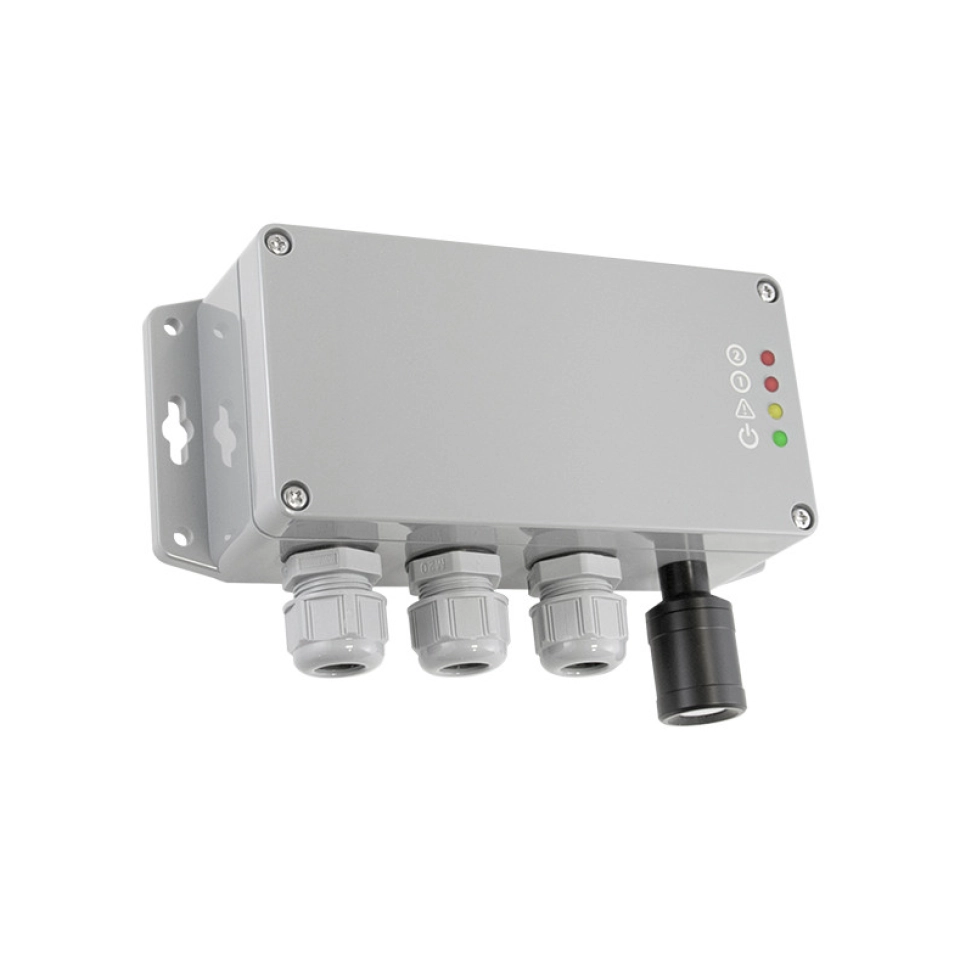
Description
| Specification | Details |
|---|---|
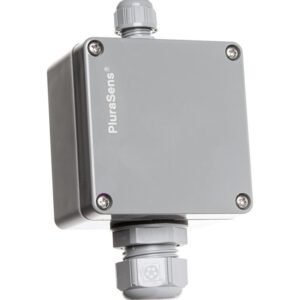
| Detected Gases | HFC and other halocarbon refrigerants & up to 20+ gases |
| Sensor Platform | PluraSens® multi-technology sensor |
| Communication Interfaces | RS485 Modbus RTU; 2 x 4-20 mA outputs |
| Relay Outputs | 3 x SPDT (2 alarms, 1 fault) |
| Alarm Indicators | LED + audible buzzer |
| Installation | Wall-mount |
| Applications | HVAC, cold storage, labs, industrial facilities |
| Power Supply | Typical industrial supply (model dependent) |
| Sensor Lifetime | Long service life |
A refrigerant detector is a safety device that senses leaks of refrigerant gases from HVAC systems, refrigeration units, or industrial chillers. These gases — including hydrofluorocarbons (HFCs), chlorofluorocarbons (CFCs), and newer blends — can accumulate in enclosed areas, displacing oxygen and creating unsafe conditions. A professional refrigerants sensor continuously samples air and triggers alarms or control actions when dangerous levels are detected, helping facility teams respond before personnel are exposed or sensitive processes are disrupted. In critical environments like laboratories, semiconductor fabs, and aerospace facilities, early leak detection protects people, equipment, and compliance standing.
Modern air conditioning systems commonly use HFC refrigerants such as R-410A, R-32, and R-134a. These gases offer efficient cooling and are chosen for their performance and reduced environmental impact compared to older CFC types.
Refrigerators and cold storage often use refrigerants like R-134a, R-404A, R-407C, and newer low-GWP blends. These refrigerants maintain temperature stability and energy efficiency in both domestic and industrial units.
Refrigerant gases fall into several categories: CFCs, HCFCs, HFCs, HFOs, and natural refrigerants (like CO₂ and ammonia). Each group has different safety, pressure, and environmental profiles, making accurate leak detection vital.
Why It Is Essential in the UAE & GCC
In the UAE and wider GCC, extreme heat drives heavy use of HVAC and refrigeration systems. Sensitive industries like aerospace MRO, pharmaceutical manufacturing, and high-tech labs rely on uninterrupted cooling and strict occupational safety standards. A reliable refrigerant detector like the E2639-HFC ensures early leak alerts, protects workers, and supports regulatory compliance in environments where refrigerant pressure and leak risks are high.
How Often Do Gas Detectors Need to Be Calibrated?
To maintain accurate readings and safety compliance, refrigerant detectors should be calibrated at least once every 12 months. Regular calibration ensures reliability and helps extend sensor life.
Why choose us?
Ensure early leak detection and total safety with the Evikon E2639-HFC Refrigerant Detector.
Contact Gas detectors UAE — trusted hydrogen gas detection suppliers in UAE and Authorised Distributor of Evikon — for expert guidance, competitive pricing, and fast delivery. Request your quote today and protect your facility with confidence!
Reviews
There are no reviews yet.