
Description
| Specification | Details |
|---|---|
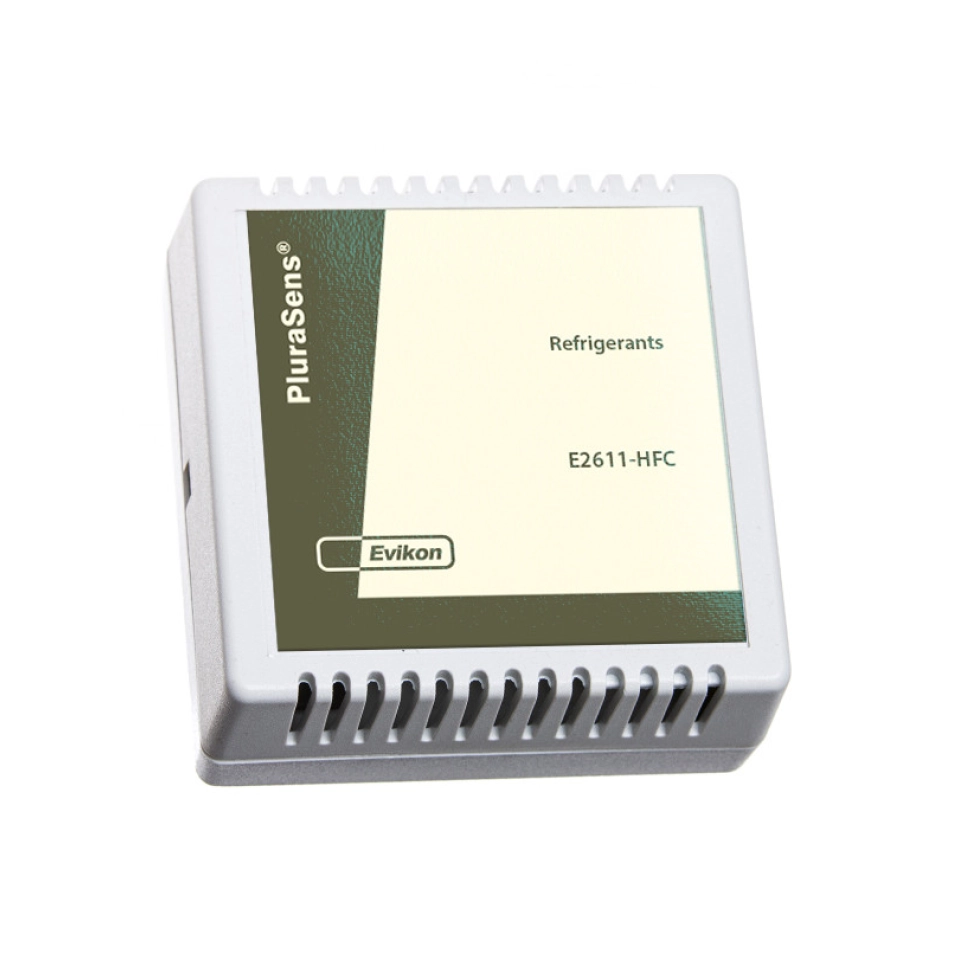
| Detected Gases | HFC/CFC/HFO refrigerants (R-12, R-123, R-125, R-134a, R-143, R-22, R-404a, R-407c, R-410a etc.) |
| Default Calibration | R-404a |
| Sensor Type | Long-life metal-oxide semiconductor |
| Sampling Method | Diffusion |
| Detection Range | 0…1000 ppm |
| Resolution | 1 ppm |
| Power Supply | 12…36 VDC (default); options: 24 VAC, 230 VAC |
| Analog Outputs | 2 × 4-20 mA / 0-10 V, user settable |
| Digital Interface | RS485, Modbus RTU |
| Relay Outputs | 2 × SPST (5 A max) |
| Alarm | Buzzer 85 dB, LED indicators |
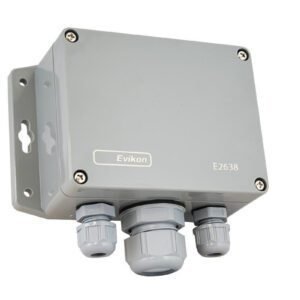
| Enclosure | ABS plastic, wall mount, IP20 |
| Dimensions | 85 × 85 × 37 mm |
| Operating Conditions | -30…+60 °C, <95 % RH |
A refrigerant detector is a safety device that senses leaks of refrigerant gases from cooling systems, chillers, HVAC equipment and industrial refrigeration. These gases — including HFCs, CFCs and HFOs — can be hazardous in confined or occupied spaces, posing risks to personnel and equipment if they accumulate unnoticed. The E2611-HFC refrigerants sensor continuously samples air, providing early alerts via relays, alarms and interface outputs before levels reach unsafe concentrations. This makes it essential for maintaining compliance, protecting workers, and preventing costly downtime due to undetected refrigerant leaks.
Modern air conditioners typically use HFC refrigerants such as R-410A, R-32 or R-134a for cooling. These gases are efficient, have low flammability, and are designed to reduce ozone depletion compared to older CFC types.
Household and commercial refrigerators often use HFCs like R-134a, R-404A, or newer low-GWP blends. These refrigerants are chosen for temperature control efficiency and compatibility with system components.
Refrigerants fall into several categories: CFCs, HCFCs, HFCs, HFOs, and natural refrigerants (like ammonia and CO₂). Each type varies in environmental impact, safety and performance characteristics.
Why Refrigerant Detection Matters in the UAE & GCC
In the UAE and GCC, advanced tech, aerospace hubs, pharmaceutical labs and climate-controlled facilities demand the highest safety standards. Refrigerant leaks can disrupt production, violate compliance, and endanger workers, particularly in sealed, high-value facilities. With extreme ambient heat and stringent occupational safety regulations, early leak detection is essential for safeguarding assets, people, and uptime in critical environments.
How Often Should Gas Detectors Be Calibrated?
Professional gas detectors like the E2611-HFC refrigerants transmitter should be recalibrated at least once every 12 months to ensure accurate readings and compliance with safety standards.
Why choose us?
Ensure early leak detection and uncompromised safety with the Evikon E2611-HFC Refrigerants Detector. Contact Gas detectors UAE, the trusted hydrogen gas detection suppliers in UAE and Authorised Distributor of Evikon, to secure your advanced refrigerant sensor today. Order now for reliable protection and compliance!
Reviews
There are no reviews yet.