
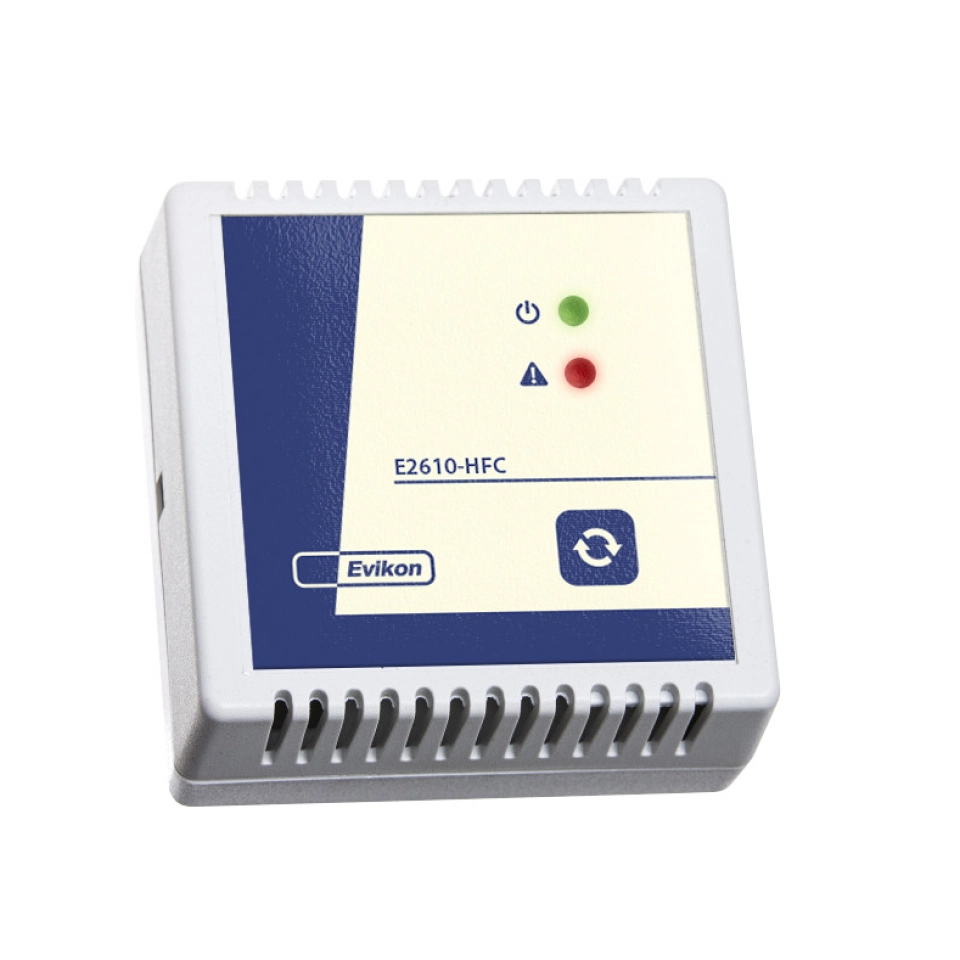
Description
| Specification | Details |
|---|---|
| Detected Gases | Various HFC/CFC/HFO refrigerants, including R-12, R-123, R-125, R-134a, R-22, R-404a, R-407c, R-410a, R-507, R-514a, R-1234yf/ze etc. |
| Default Calibration | R-404a |
| Sensor Type | Metal-oxide semiconductor |
| Sampling Method | Diffusion |
| Sensor Lifetime | > 5 years |
| Power Supply | 24 VDC/AC ±20% (default) or 230 VAC optional |
| Digital Interface | UART |
| Output Relays | 2 × SPDT, 250 VAC/30 VDC max |
| Alarms | Visual LED & Buzzer 85 dB |
| Enclosure | IP20 wall-mount, ABS plastic |
| Operating Conditions | -30 °C to +70 °C, ≤95 % RH |
A refrigerant detector is a safety device that senses and alerts to leaks from cooling systems. These systems use refrigerants such as hydrofluorocarbons (HFCs), chlorofluorocarbons (CFCs), and hydrofluoroolefins (HFOs). A high-quality refrigerant detector continuously monitors air around chillers, cold rooms, HVAC systems, and process equipment to protect workers and equipment from exposure to harmful gases. Early detection prevents hazardous conditions, maintains compliance with safety standards, and safeguards production areas from costly contamination or downtime.
Air conditioning systems commonly use HFC refrigerants like R-410A and R-32, chosen for their efficient cooling performance and reduced ozone depletion potential compared to older CFC types. These gases are non-flammable and widely used in residential and commercial HVAC systems.
Modern refrigerators typically use HFCs such as R-134a or newer low-GWP refrigerants like R-600a (isobutane) in household models. Industrial systems may also use blends like R-404A, depending on cooling capacity requirements.
Refrigerants fall into several families: CFCs, HCFCs, HFCs, HFOs, and natural refrigerants (like CO₂ and ammonia). Each class has unique characteristics in terms of environmental impact and flammability. Control and monitoring are essential in all systems that house these gases for safety and compliance.
Why Refrigerant Detection Matters in the UAE & GCC
With the UAE’s rapid growth in advanced manufacturing, aerospace MRO, pharmaceutical facilities, and cleanrooms, maintaining robust refrigerant leak detection is critical. Extreme temperatures, stringent safety standards, and the need for uninterrupted cooling in precision environments mean early leak alerts prevent downtime, protect personnel, and uphold regulatory compliance across the GCC.
How Often Should Gas Detectors Be Calibrated?
Gas detectors like the E2610-HFC refrigerants detector should be calibrated at least once every 12 months to ensure accuracy and compliance with safety standards.
Why choose us?
Ready to safeguard your facility with the best in refrigerant leak detection? Contact Gas detectors UAE, the trusted hydrogen gas detection suppliers in UAE and Authorised Distributor of Evikon today. Get your E2610-HFC Refrigerants Detector now to ensure continuous protection, compliance, and peace of mind.
Reviews
There are no reviews yet.