
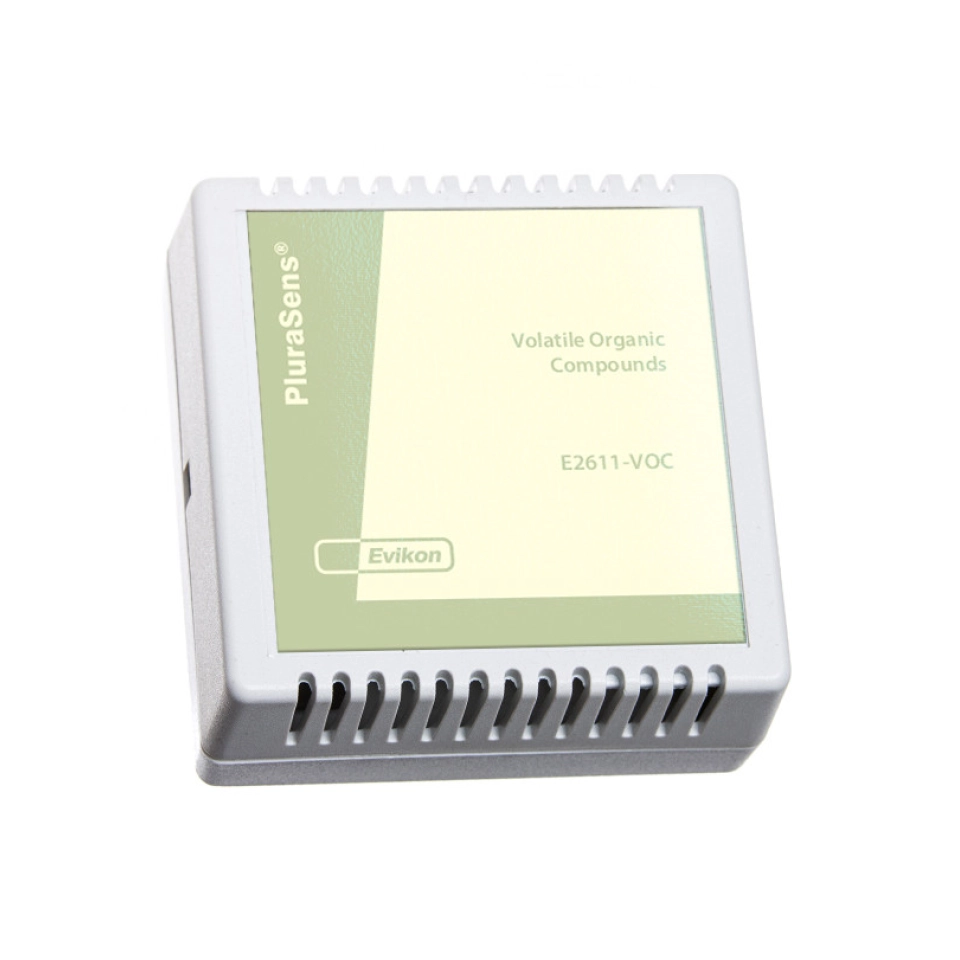
Description
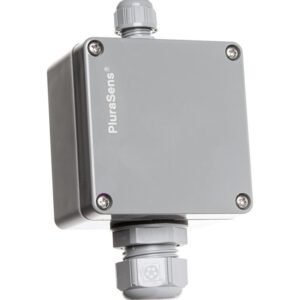
| Specification | Details |
|---|---|
| Detected Vapors | Acetone, ethanol, toluene, xylene and more |
| Default Calibration | Toluene |
| Sensor Type | Metal-oxide semiconductor |
| Sampling Method | Diffusion |
| Detection Range | 0…100% LEL / 0…1000 ppm |
| Resolution | 0.1% LEL / 1 ppm |
| Sensor Lifetime | > 5 years |
| Power Supply | 12…36 VDC (default), 24 VAC or 230 VAC options |
| Analog Outputs | 2 × 4-20 mA / 0-10 V |
| Digital Interface | RS485 Modbus RTU |
| Output Relays | 2 × SPST, 5 A max |
| Alarm | Internal buzzer |
| Enclosure | ABS plastic, IP20 |
| Dimensions | H85 × W85 × D37 mm |
| Operating Conditions | -30…+70 °C, < 95 %RH |
A solvent vapors detector is an essential safety device that continuously monitors air for volatile organic compounds (VOCs) and solvent vapors. These detectors protect personnel and sensitive processes by identifying hazardous concentrations before they reach dangerous levels.
By acting as a solvent vapors sensor and transmitter, the system triggers alarms or control actions when thresholds are breached. This proactive vapor detector approach ensures compliance with occupational health standards and minimizes risk in environments where solvent mixtures are present.
The water vapour transmission rate (WVTR) measures how much water vapor passes through a material over time:
WVTR = W / (A × t)
Where W = water mass transmitted, A = surface area, t = time. This formula is used mainly in material testing and packaging science.
Solvent extraction commonly uses organic liquids like hexane, ethyl acetate, and kerosene. These solvents selectively dissolve specific components from mixtures, commonly applied in chemical and pharmaceutical processing.
Solvent extraction separates compounds based on solubility. A chosen solvent dissolves the target substance, then the solvent-rich phase is separated from the original mixture. The target compound is recovered after removing the solvent.
Why It’s Essential in the UAE & GCC
In the UAE and GCC, advanced technology sectors — including aerospace, semiconductor, and life sciences — demand the highest safety standards. A reliable solvent vapors detector is vital in these industries to protect personnel, avoid contamination, and comply with strict health and safety regulations. As the region accelerates economic diversification, investing in robust vapor detection systems reinforces world-class facility safety.
How Often Do Gas Detectors Need to Be Calibrated?
To ensure accuracy and reliability, gas detectors such as solvent vapors detectors should be calibrated at least annually. More frequent calibration may be needed in demanding environments or where regulations specify stricter schedules.
Why choose us?
Take control of your facility’s safety with the advanced Evikon [E2611-VOC Solvent Vapor Detector]. As leading hydrogen gas detection suppliers in UAE and Authorised Distributor of Evikon, Gas Detectors UAE offers expert support, installation guidance, and tailored safety solutions.
Contact us now to request a quote and secure your workplace with trusted solvent vapors detection solutions.
Reviews
There are no reviews yet.