
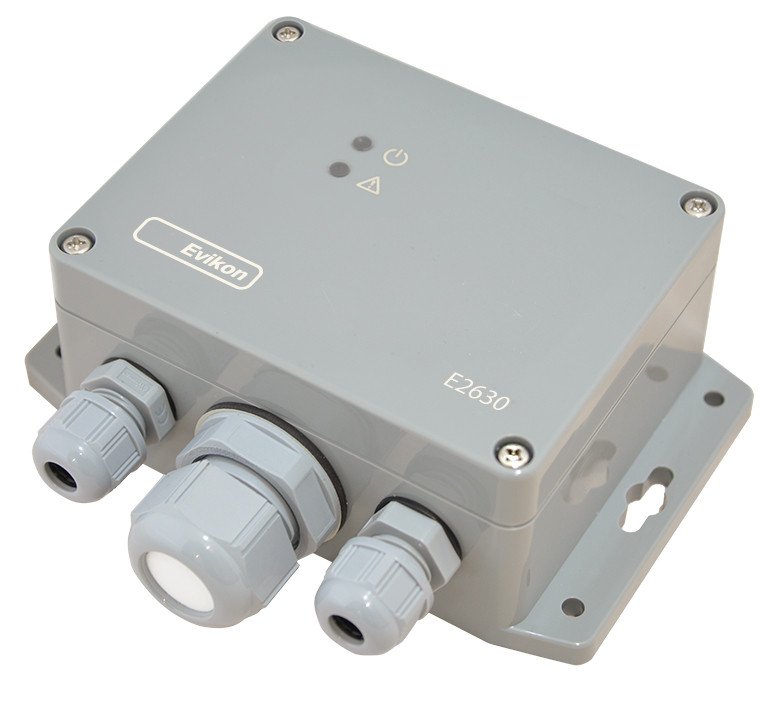
Description
| Specification | Details |
|---|---|
| Sensor type | Electrochemical cell |
| Sampling method | Diffusion |
| Detection range | 0…200 ppm (standard) / 0…1000 ppm (high-range) |
| Resolution | 1 ppm CO |
| Accuracy | ± (3% of detection range + 5 ppm CO) |
| Response time (T90) | < 30 seconds |
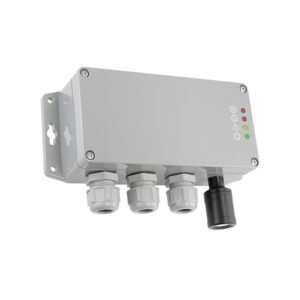
| Alarm signals | Blinking LED + 85 dB buzzer |
| Output | 2 × SPDT relays (250 VAC / 30 VDC, 5 A max) & UART digital interface |
| Power supply | 24 VDC/AC ±20% (default) or 230 VAC optional |
| Enclosure | IP65, wall-mount, ABS plastic |
| Sensor lifetime | > 10 years |
| Operating conditions | –40 … +70 °C, 15–90% RH |
A carbon monoxide detector is a device that senses the presence of CO gas — a colorless, odorless, and highly toxic gas — in the air. It continuously monitors air quality and triggers alarms if CO concentration rises above safe thresholds. In industrial and high-precision environments, a reliable detector like the E2630-CO ensures early warning and protection of both personnel and processes.
When CO concentration exceeds preset thresholds, the detector emits a loud buzzer (≈ 85 dB) accompanied by a blinking LED — an unmistakable sound-and-visual alert designed to catch attention even in noisy industrial settings.
Carbon monoxide detectors — including E2630-CO — are specifically designed for CO gas (carbon monoxide). They do not detect natural gas (methane) or other combustible gases. Specialized detectors are required for natural gas leaks.
Carbon monoxide binds with hemoglobin in the blood more strongly than oxygen, reducing the blood’s capacity to carry oxygen — which can cause headaches, dizziness, unconsciousness, or death. Because CO is odorless and invisible, only a detector can reliably alert you to its presence.
In the UAE and GCC region, advanced industries — aerospace MRO facilities, semiconductor fabs, pharmaceutical labs — are growing rapidly. These environments demand world-class safety standards. The E2630-CO ensures compliance with occupational health norms while protecting expensive assets, sensitive cleanroom processes, and, most importantly, human life.
Calibration frequency depends on application and standards. For industrial fixed detectors like E2630-CO, a calibration or functional check every 6 to 12 months is common. In high-risk or variable environments — like labs or cleanrooms — calibration may be required 3–4 times per year.
Get Protected, Invest in Safety Today!
Ready to safeguard your facility, workers, and critical processes? Choose the E2630-CO, your trusted hydrogen gas detection supplier in the UAE and authorized distributor of Evikon.
Order now at gasdetectors.ae and ensure world-class CO safety standards in your facility.
Reviews
There are no reviews yet.