
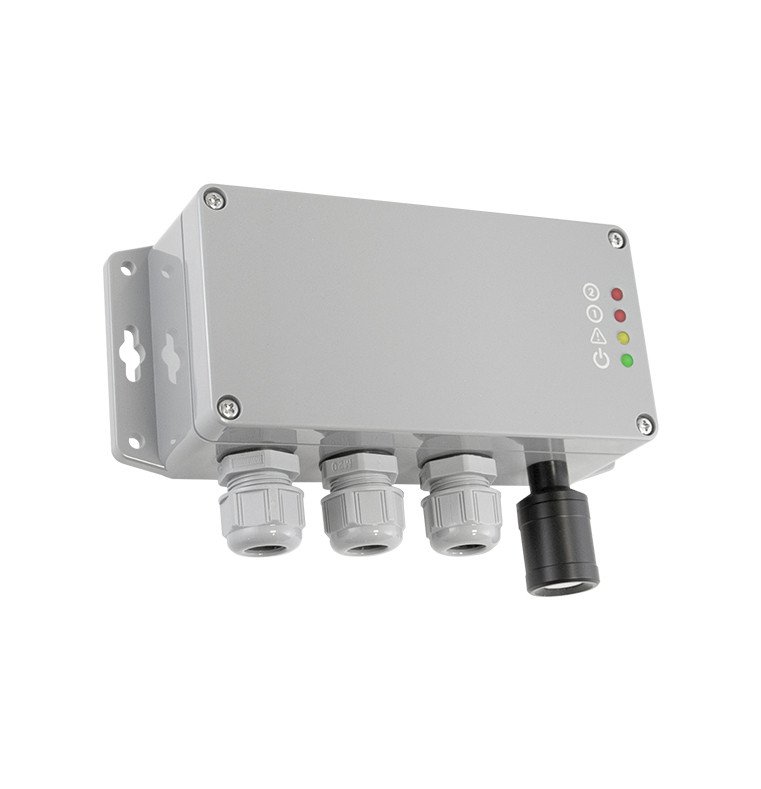
Description
| Parameter | Specification |
|---|---|
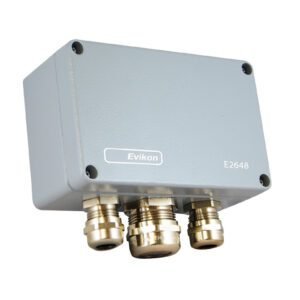
| Model | E2639-LEL Combustible Gases Detector |
| Brand | Evikon |
| Sensing Method | Catalytic bead sensor |
| Measuring Range | 0…100% LEL |
| Accuracy | ±3% FS |
| Output Options | 4–20 mA, RS485 Modbus, Relay |
| Supply Voltage | 24V DC |
| Response Time (T90) | < 20 seconds |
| Operating Temperature | –20°C to +50°C |
| Humidity | 10–90% RH (non-condensing) |
| Enclosure Rating | IP65 |
| Housing Material | ABS/Polycarbonate |
| Calibration | Manual / Auto Zero |
| Sensor Life | Up to 3 years |
| Installation Type | Wall-mounted industrial |
A combustible gas transmitter is a fixed gas-monitoring device that continuously measures the concentration of flammable or explosive gases in the air. It sends this data to a control panel, PLC, or BMS system so operators can take action before gas levels reach dangerous limits. These transmitters are essential in high-value facilities because they provide 24/7 protection, automate alarms, and ensure compliance with strict international safety standards. In industries such as chemicals, semiconductor production, pharma, and aerospace, even a minor combustible gas leak can disrupt production or create safety hazards. A transmitter like the E2639-LEL acts as an early warning system to prevent fires, explosions, or contamination events.
A gas sensor detects changes in the air by measuring how gas molecules interact with a sensing element. In catalytic bead sensors, flammable gases burn on an active bead, raising its temperature and electrical resistance. The detector converts this change into a readable gas concentration. (Under 100 words)
Most safety standards recommend carrying at least one portable multi-gas detector per crew member working in hazardous or confined spaces. Ships, aircraft maintenance teams, and industrial sites often require two or more detectors as redundancy to guarantee continuous monitoring during operations. (Under 100 words)
Gas detectors generally fall into four main types: fixed detectors, portable detectors, single-gas detectors, and multi-gas detectors. They may use catalytic bead, infrared (IR), electrochemical, or PID sensor technologies. Each category is suited to different gases, applications, and hazard levels. (Under 100 words)
Rapid industrial growth in the UAE, Saudi Arabia, and GCC has led to more high-tech manufacturing, semiconductor fabs, hydrogen hubs, and aerospace facilities. These sites rely heavily on flammable gases—from natural gas to hydrogen, solvents, and specialized hydrocarbons. With rising safety expectations, government regulation, and the region’s push for world-class industrial standards, advanced combustible gas monitoring is no longer optional—it’s mission-critical. The Evikon E2639-LEL ensures precise detection, operational continuity, and regulatory compliance across these premium industries.
Most industrial combustible gas detectors should be calibrated every 6 months, with bump testing performed monthly or before each critical operation. High-purity facilities or harsh environments may require more frequent calibration to maintain sensor accuracy.
Why choose us?
Protect your facility with UAE’s most trusted industrial gas safety specialists.
As the authorised distributor of Evikon and leading hydrogen gas detection suppliers, Gas Detectors UAE delivers certified, high-precision solutions tailored for your industry.
Contact Pureair for pricing, expert consultation, and fast delivery: Evikon
Reviews
There are no reviews yet.