
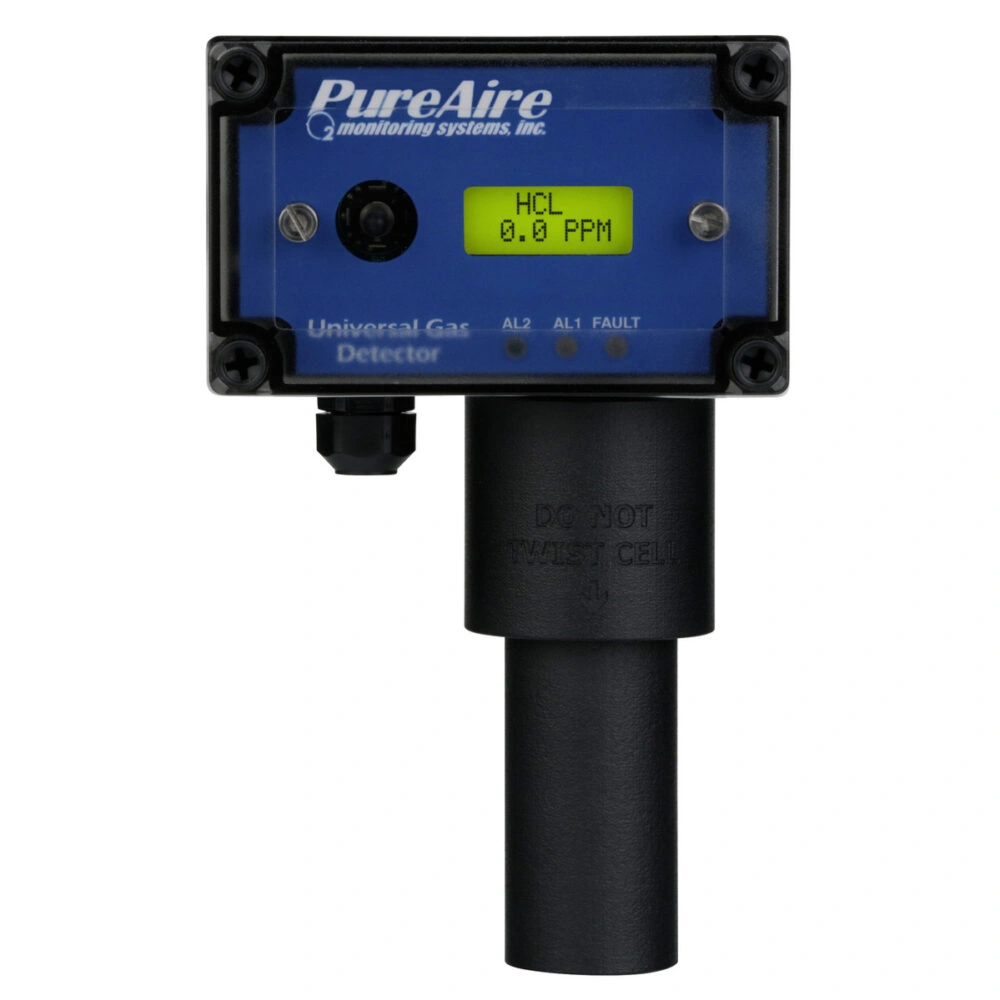
Description
| Specification | Details |
|---|---|
| Gas Detected | Phosphoryl Chloride (POCl₃) |
| Detection Range | 0–1 ppm |
| Accuracy | ±0.05 ppm |
| Sensor Type | Non-depleting Electrochemical / Infrared Sensor |
| Response Time (T90) | < 60 seconds |
| Display | Digital LCD with concentration readout |
| Alarm Indicators | Audible/Visual alarms with relay output |
| Operating Temperature | 0°C to 50°C |
| Power Requirements | 24 VDC |
| Output Signal | 4–20 mA analog, Modbus digital output |
| Enclosure | NEMA 4X corrosion-resistant housing |
| Certifications | CE, RoHS, UL Compliant |
| Manufacturer | PureAire Monitoring Systems |
A phosphoryl chloride gas sensor is a precision instrument designed to detect the presence of phosphorus oxychloride (also known as phosphoryl trichloride) vapors in the air. Phosphoryl chloride, with CAS No. 10025-87-3, is a toxic and corrosive chemical used widely in semiconductor manufacturing, pharmaceuticals, and chemical synthesis. Exposure can cause respiratory damage, so continuous monitoring is essential for maintaining safe working conditions and meeting industrial hygiene standards. The phosphoryl chloride gas monitor ensures workers and assets are protected from invisible leaks that could threaten both health and process purity.
The phosphoryl chloride gas detector operates by continuously sampling ambient air and analyzing it through a non-depleting infrared sensing technology. This sensor measures changes in gas concentration using light absorption—delivering precise, drift-free readings without consuming the sensing element.
Detecting phosphorus-containing gases like phosphoryl chloride requires specialized sensors sensitive to chlorine-phosphorus compounds. The detector identifies even minor variations in gas concentration, ensuring immediate response in environments where phosphorus-based compounds are used or stored.
When phosphorus reacts with oxygen, it forms phosphorus pentoxide (P₂O₅)—a highly reactive compound that can combine with moisture to form acids. Such reactions highlight why monitoring for phosphorus oxychloride and related gases is critical to prevent corrosion, contamination, and equipment degradation.
With the UAE’s rapid expansion in aerospace, semiconductor fabrication, and pharmaceutical industries, implementing continuous gas detection is not just about compliance—it’s about trust and protection. Facilities in Dubai, Abu Dhabi, and across the GCC are adopting international HSE standards to safeguard high-value assets and human capital. The Phosphoryl Chloride Gas Detector ensures that these advanced industries operate safely, aligning with the nation’s economic diversification and sustainability goals.
Reviews
There are no reviews yet.